Dynamics 365 Business Central vs Odoo | ERP Comparison 2026
As we all know, Microsoft Dynamics 365 Business Central and Odoo are two of the most popular ERP systems in the modern market. But the real question is, how do you decide which one is best for your business?
No need to worry. You’re in the right place. The article will go into the depth of Business Central vs Odoo.
When comparing these two solutions, you soon find that the choice does not solely consist in the comparison of features. It is about getting the right match to your organization, in the cost, integration, scalability, localization to Canada, and sustained service.
According to a 2025 report by Grand View Research, the ERP market in the world will be USD 123.41 billion by 2030 with a CAGR of 11.7% between 2025 and 2030.
This rapid growth emphasizes the importance of the fact that today business has become more dependent on the ability to select the appropriate ERP solution, which will allow integrating data, facilitating business processes, and improving decisions.
Thus, investing wisely in the right technology is not only a beneficial decision but also a strategic decision that will help the business survive and thrive in the market.
This article compares Business Central and Odoo so you can choose the best system for your Canadian business.
Overview of Business Central and Odoo
Business Central
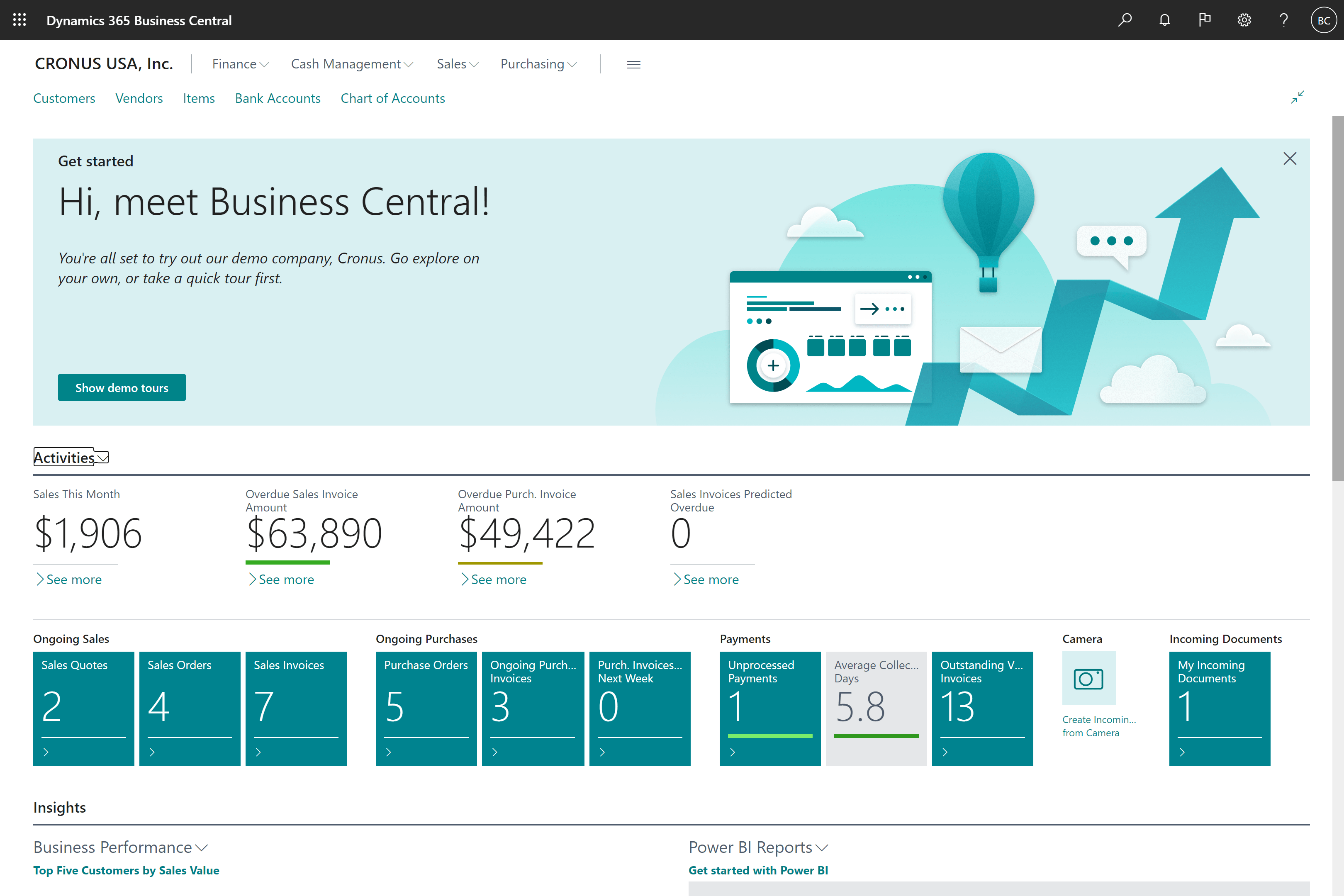
Business Central is a cloud-based ERP product designed by Microsoft that targets small to mid-sized enterprises and is a subset of the Microsoft Dynamics 365 family. It is based on the tradition of Microsoft Dynamics NAV and is closely interconnected with the Microsoft environment (Azure, Microsoft 365, and Power BI). The IT infrastructure management burden is eliminated by Business Central, unlike Odoo, which is recommended to SMBs that need reliability.
In other words, Business Central offers high compliance, multi-currency support, localization, and familiar Microsoft user interfaces for finance teams that are already accustomed to using Excel and Outlook in the Canadian market.
Odoo
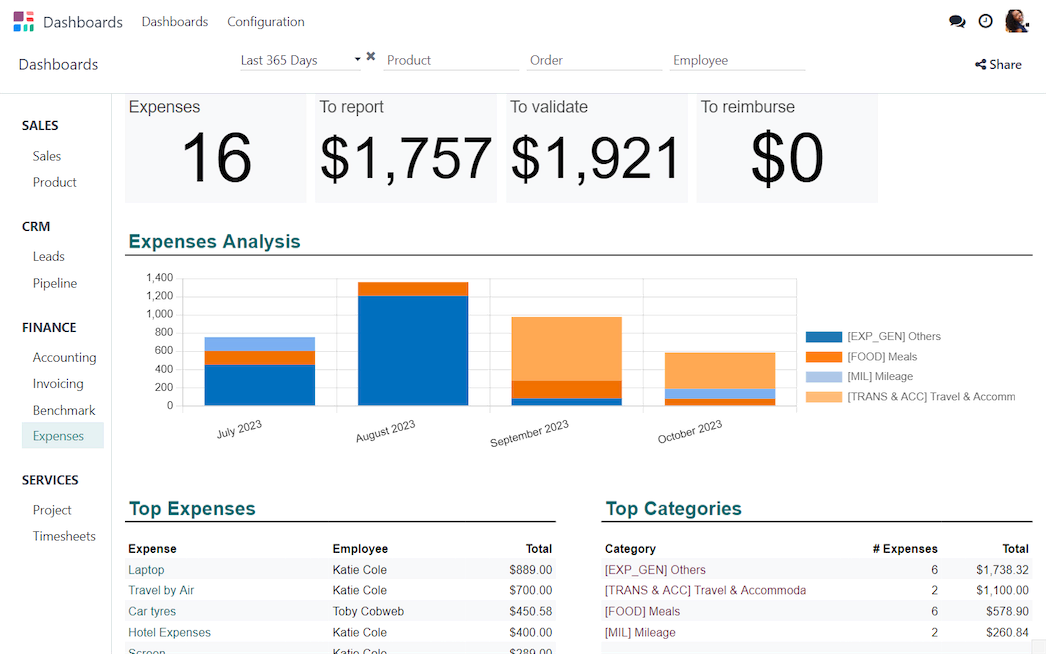
Odoo is an open-source modular ERP suite, which is being developed by Odoo S.A., and covers CRM, accounting, inventory, manufacturing, eCommerce, etc. It is flexible, has modular pricing, and is deeply customizable, which is why it is appealing. Odoo provides a competitive option to smaller Canadian companies that want a lighter entry point to ERP or have in-house development means.
Now, let's discuss the main features and advantages of each platform before making a comparison of both.
Features & Benefits
Features of Business Central
- Financial end-to-end management reporting in real-time
- integrated supply chain and inventory control
- Built-in customer relationship management (CRM)
- Native connectivity with Microsoft 365 (Excel, Outlook, Teams)
- Artificial intelligence-based predictive and decision-making
- Job and project costing features
- Strong security and compliance with Microsoft Azure
- Workflow and approvals automation
- Role-based dashboards and analytics
Benefits of Business Central
- Enhances financial accountability and monitoring
- Improves departmental operational efficiency
- Allows making better decisions with real-time data
- Minimizes data entry and human error
- Increases collaboration through Microsoft ecosystem integration
- Scales easily as your business expands
- Ensures cloud access and remote work and mobility
- Facilitates ease of compliance and audit
- Reduces IT maintenance costs compared to legacy systems
- Enhances customer satisfaction by offering better delivery service
Features of Odoo
- Modular structure allowing businesses to start small and expand as needed
- Intuitive and customizable user interface
- High level inventory and system for warehouse management
- Built-in eCommerce and web management system
- Complete project and task management
- Real-time dashboard and business analytics
- Third-party integration through APIs
- On-the-go platform that is mobile friendly
- Scalability and customization of open source
Benefits of Odoo
- Provides a complete package that does not require users to use different software
- Offers cost-effective ERP implementation to SMEs
- Enables versatile modularity in deployment
- Enhances efficiency by automating the working processes
- Lowers the presence of data duplication and improves visibility of workflow
- Easily scalable to business expansion and requirements
- Increases customer interaction through integrated CRM and marketing systems
- Customizable to suit business-specific demands
- Enhances e-commerce using web and mobile connectivity
- Promotes innovation using its open-source ecosystem
- After discussing the features and benefits of both, now it’s time to understand Business Central vs. Odoo.
Business Central and Odoo Comparison
Now, we will discuss the common pitfalls you may encounter with each platform to ensure you are not caught off guard.
Challenges with Business Central
- The initial expense and licensing fees may be higher than expected in the smaller firms.
- Implementation also may involve change management (training, new processes) and often needs to be certified by a partner.
- Heavy customization beyond standard modules may still be possible but requires extension development and careful upgrade planning.
- The scale and the cost of Business Central might be heavy in the case of very small businesses.
Challenges with Odoo
- Due to modularity and open-source build, it becomes more complex to make decisions; it means you must choose modules, host, customize, and usually build more in-house or through third parties.
- Custom coding can make it difficult to upgrade the version, i.e., you need to budget for upgrade-related work.
- The support ecosystem (in particular, the non-enterprise version) can be smaller.
- Heavy add-ons or custom development might be necessary to make Odoo comparable to mature ERP in terms of its complex operations, like manufacturing with high regulatory & compliance requirements.
Now, it’s the right time to understand how you select between Business Central and Odoo in the Canadian environment.
Choose the Right Solution
The following are some of the top decision factors to consider:
Current Technology Stack & Ecosystem.
If you already use Microsoft 365, Azure, and Power BI and prefer the tight integration and upgrades you can predict, Business Central will be a good solution. Odoo may be more appealing if your setup is diverse, primarily consists of open-source systems, and requires greater flexibility.
Budget & Scale
Odoo may have a lower cost of entry and modular ramp-up due to the lower user count and complexity of business processes in small businesses. However, when you expect massive growth or international operation, or when you require enterprise-grade compliance and support, Business Central is more assured and tends to be cheaper per unit as you grow.
Personalization vs. Standardization
Your operations may require heavy customization in case they are unique. Odoo offers more open-ended flexibility, at the cost of increased complexity in upgrades. Business Central provides best practice processes and pre-built extensions that can reduce the burden and risk of customization.
Implementation Partner and Support
When you involve a partner such as Dynamics Square (a certified Microsoft Dynamics partner), you get access to a well-developed implementation approach and Canadian experience (Toronto and other provinces), as well as long-term support. Odoo requires local partner knowledge, specifically the localization of Canada (taxes, currency, and compliance).
Long-Term Total Cost of Ownership (TCO)
Do not only consider the cost of the license. Consider hosting (cloud or on-premises), maintenance customization, upgrades, training, support, compliance, and change management. Business Central would be more expensive in the short run but will likely provide a more reliable TCO. Odoo may seem cheap initially, but there may be underlying expenses.
Industry and Usage Scenario
Business Central tends to be better suited to manufacturers, distributors, or multi-entity business cases. Odoo could be sufficient in case of lighter-weight service, eCommerce, or simple use cases of ERP.
In short:
Choose Business Central if you require enterprise-level reliability, integration with Microsoft business tools, expansion and scale, and standardized business processes, and you have or intend to have a partner such as Dynamics Square to handle implementation.
Choose Odoo if you are a smaller business with a tight budget, wish to implement solutions modularly, and require your in-house development resource (or partner) to manage the customization process, especially if your processes are unregulated or less standardized.
Conclusion
There is no sure-shot winner in the Business Central vs. Odoo debate. Each ERP system has its strengths, and your final decision should align with the size, complexity, budget, growth plans, and current technology infrastructure of your Canadian firm. Business Central is a better long-term strategic decision for many Canadian organizations, particularly the ones already deep into Microsoft technologies, planning expansion, integration, and broader digital transformation.
When you choose Business Central and select Dynamics Square as your implementation partner, you get access to local knowledge and established implementation strategies, continuing support, and a long-term roadmap. We assist Canadian business in the selection process of ERP, comparing prices (Odoo vs Business Central cost), planning your business needs (manufacturing vs finance vs distribution).
Moreover, we provide a unique implementation of Business Central (or migration) with the least amount of disruption and the highest level of ROI.
Still, if you have any doubts, feel free to contact us via call at +1 778 381 5388 or send an email at info@dynamicssquare.ca.
People Also Ask:
What is the difference between Odoo and Microsoft Dynamics?
Odoo is an open-source ERP that offers modular apps for accounting, CRM, HR, inventory, and more, allowing for full customization. In contrast, Microsoft Dynamics 365 Business Central is a cloud-based ERP tailored to end-to-end business management, which is further integrated with Microsoft 365 and Power BI to provide enhanced automation and analytics.
Is Business Central an ERP or CRM?
Business Central primarily functions as an ERP solution, managing finance, supply chain, operations, and projects. However, it also includes standard CRM features of handling customers, sales, and service.
.jfif)
Himank Kochar is a technical content writer at Dynamics Square. With a passion for writing and technology, he focuses on creating clear and informative blogs for readers. He enjoys breaking down complex topics into simple, easy-to-understand ideas. He believes in writing content that adds real value and helps readers make informed decisions.