Demand Planning: Brief, Steps, Software in Canada | 2026
If your business is struggling to clear its overstocked inventory or even missing sales all the time, this article will help you to understand how demand planning and forecasting functions and how the appropriate tools can transform your operations
As we know, in the current competitive business environment, whereby customers are changing preferences more rapidly than ever, it has become a serious issue for the business to ensure that the right product is at the right place and at the right time, without excessively stocking the products or missing the sales.
Organizations should adopt the concept of demand planning and supply planning to remain profitable and not become one of those firms that end up tying up capital in unsold stock or lose their customers to the problem of stockouts.
In addition, industry leaders emphasize that good demand planning will enable planners to be more productive, reduce operation costs, and enhance accuracy in the forecast, which is very vital in an operation with a small profit margin.
However, before getting into the details, first understand what exactly demand planning means.
What is Demand Planning?
The process of estimating future demand of products or services by the customers and then utilizing that estimate to plan the inventory, production, and replenishment is known as demand planning. It is an interdisciplinary field that falls in between sales, marketing, finance, and the supply chain.
Furthermore, demand planning allows a company to balance supply and demand based on statistical modelling and AI-driven insights to predict the needs of customers effectively, minimize inventory expenses, and improve the level of service.
What’s Included in Demand Planning?
A demand planning function is usually comprehensive, and it involves the following elements:
Historical demand analysis: Valid, clean sales and shipment history.
Statistical forecasting models: Time series, causal, and advanced demand planning techniques including, machine learning models.
Promotions and event planning: Marketing planning, seasonality, and product promotion.
Collaboration and consensus: S&OP or IBP processes that coordinate sales, finance, and operations.
Exception management: Processes to consider and modify forecasts in case of model errors.
KPIs and reporting: Accuracy of the forecast, bias, stock outs, days of inventory, and service levels.
Key Activities in Demand Planning
Data collection/cleansing: collect POS, ERP, promotions, and external cues.
Run baseline statistical forecasts: produce automated forecasts per SKU/location.
Adjust events: make judgmental promotional, launch, or one-off adjustments.
Consensus forecasting (collaborative review): coordinate sales, marketing, and finance perceptions in S&OP/IBP meetings.
Monitor and improve: Measure KPIs forecasts, detect exceptions, and optimize demand planning techniques.
Demand Planning Implementation: Step by Step
1. Define scope: Start by identifying which SKUs, locations, and planning horizons will be included. At this stage, set clear targets such as service levels (for example, 95%) and forecast accuracy metrics like MAPE to align planning with business goals.
2. Combine and consolidate data: Integrate ERP, POS, historical sales, and promotion calendars into a single source of truth. Consistent and centralized data improve the demand planning and forecasting reliability and ensure all teams work with the same assumptions.
3. Choose forecasting techniques: Apply simple time-series models for stable items and use causal or machine-learning techniques for products affected by promotions, seasonality, or external drivers. Using the right method for each product improves overall accuracy.
4. Automate baseline forecasts: Generate baseline forecasts automatically on a scheduled basis and flag exceptions for review. Automation reduces manual effort and allows planners to focus on items that truly need attention.
5. Develop an S&OP rhythm: Establish a weekly or monthly S&OP cycle to review forecasts and reach consensus across sales, marketing, finance, and operations. This step ensures alignment before plans move into execution.
6. Combine with supply planning: Feed the approved demand forecast directly into production, procurement, and inventory planning. This linkage ensures demand and supply planning stay synchronized and supports efficient operational execution.
Best Demand Planning Software
Some of the best demand planning software are mentioned below:
Microsoft Dynamics 365 Supply Chain Management
.png)
Dynamics 365 Supply Chain (D365 SCM) offers next-generation demand planning and forecasting solution. It is aimed at offering statistical forecasting, cooperation, and integration with ERP /supply-chain modules.
Features
- Offers statistical forecasting models like ARIMA, ETS, Prophet, and XGBoost.
- AI and Copilot support (natural language intelligence on demand plans).
- Time-freeze rules and exceptions that allow locking forecast periods and managing updates.
Best For: Organizations that have already invested in Microsoft technology, including Dynamics 365 Finance and Dynamics 365 Business Central, and whose planners desire to be integrated into it.
RELEX Solutions
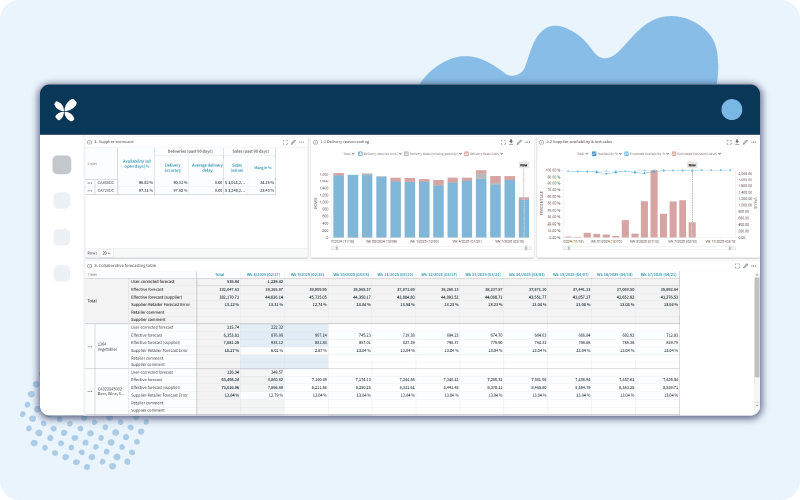
RELEX Solutions proposes a coherent platform for planning retail, manufacturing, and supply chain processes with an intensive emphasis on demand planning, inventory optimization, and automation of replenishment. Their demand planning module is designed to achieve the high accuracy level, and every one of the manual tasks is automatized.
Features
- Forecasting engine based on machine learning and incorporating hundreds of demand drivers.
- Optimization of the inventory and automation of replenishment based on the planning process.
- Cloud-native, scalable architecture across stores, channels, and geographies.
Best For: The retailers, omni-channel distributors, or manufacturers with a high demand of forecast accuracy and automated replenishment in many stores or SKUs.
Blue Yonder
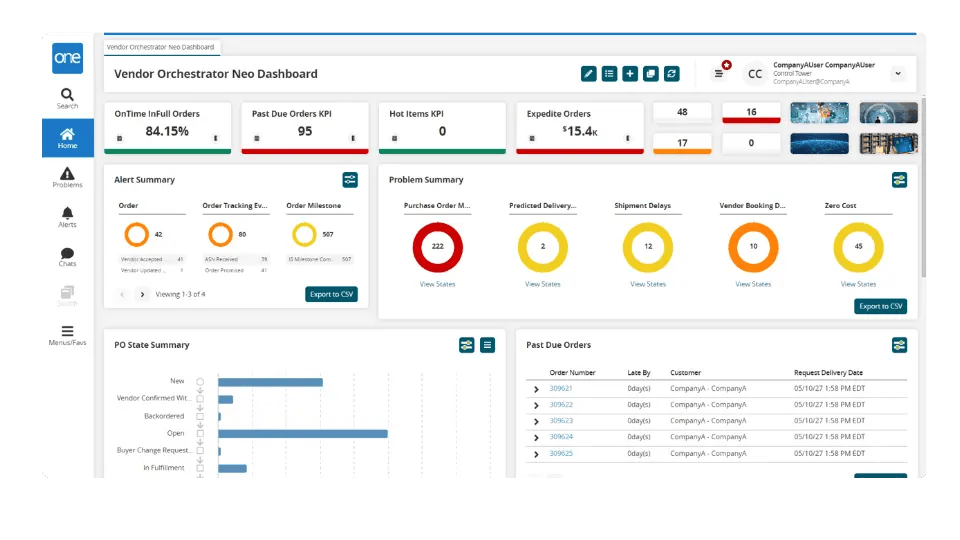
Blue Yonder provides cloud-native, AI/ML-driven demand planning tools and scenario planning as part of the end-to-end supply chain management software suite. It is targeted towards those organizations that want to have advanced features both in terms of demand and supply planning.
Features
- Complex AI/ML algorithms and patented algorithms to enhance the accuracy of forecasts (Blue Yonder claims an increase of about 12%)
- Integration with the supply, replenishment, manufacturing, and distribution planning.
- Cloud-native microservices architecture to be scaled and responsive.
Best For: Big production or world supply chain companies that have complicated, multi-site, multi-channel demand and supply networks.
Oracle NetSuite
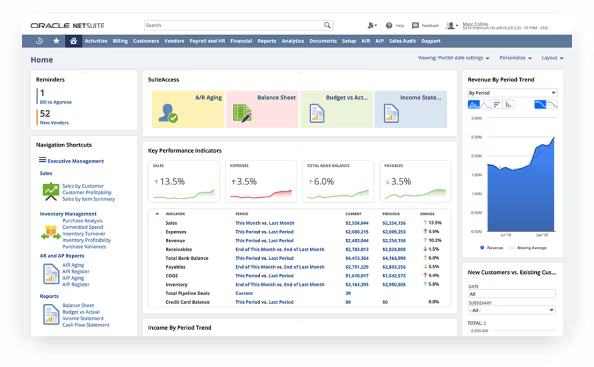
The demand planning of NetSuite belongs to the wider NetSuite ERP package. It allows companies to predict demand, create supply plans, and optimize inventory using historical demand, seasonality, sales opportunity, and other considerations. It is simpler than more specific demand planning and forecasting specialists yet offers power to businesses already on NetSuite ERP who would want modular add-on features.
Features
- Knowledge of how to make predictions based on the demand by different means, including linear regression, moving average, and seasonal average.
- Capability to prepare supply plans (purchase orders, work orders) that are based on forecast, safety stock, and lead time.
- Integration within NetSuite ERP supply chain, like inventory, procurement, and sales modules.
Best For: Organizations with a tight budget and moderate level of demand pattern.
o9 Solutions
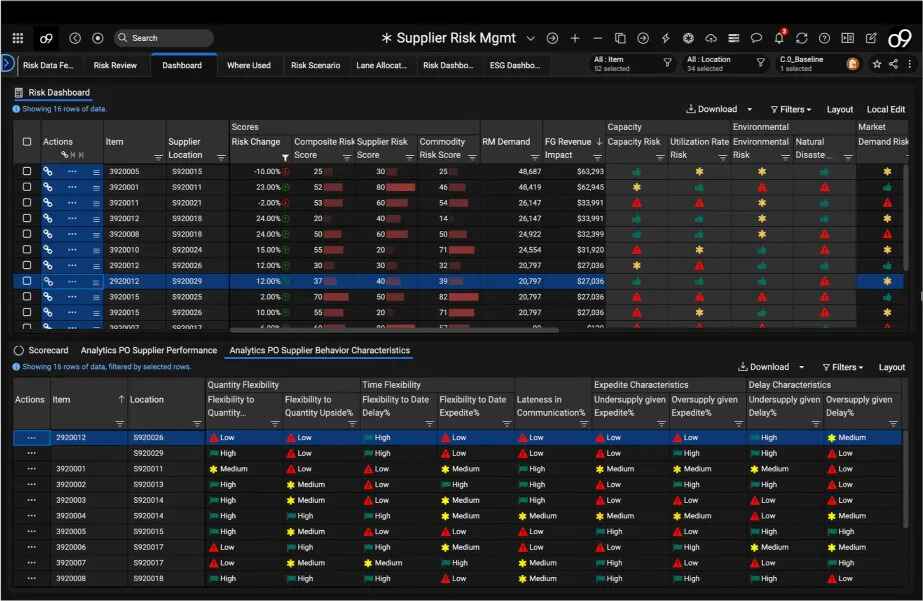
O9 solutions combines predictive analytics, assumption management, collaboration, and advanced scenario modelling within a single platform. It enables large enterprises operating with complex networks and demand and supply imbalances to achieve better accuracy, less inventory, and do planning cycles faster.
Features
- Knowledge graph of the enterprise to unify data between functions and geographies.
- The flexible demand assumption means monitoring volume/value on any horizon or unit.
- Risk and opportunity (R&O) modelling, i.e., what-if analysis of demand effects on P&L.
Best For: Organizations that require extensive scenario modelling (risks, promotions, disruptions) and high levels of automation.
Kinaxis
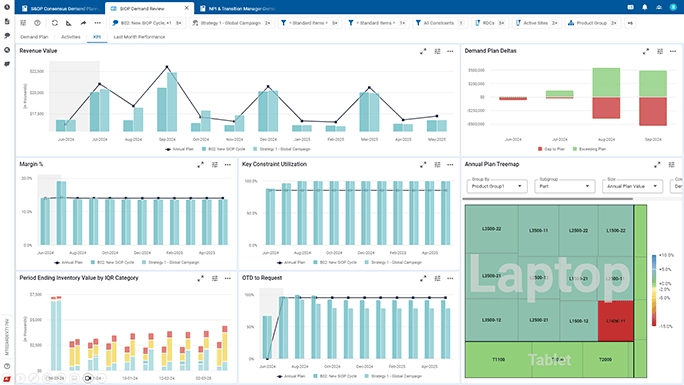
Kinaxis is also providing a demand planning forecasting feature as a component of its wider Rapid Response supply chain software. It is about aligning teams, minimizing risks, and optimizing supply chains using AI-powered demand planning.
Features
- AI-driven demand prediction, collaborative and agile.
- What-if scenario modelling and supply-chain risk visibility, allowing planners to experiment with disruption in the supply chain and demand.
- Single interface in which the demand planning is integrated with supply planning, inventory optimization, and execution.
Best For: Companies that want to go beyond the foundational forecasts into risk-conscious in terms of demand and supply planning.
Board
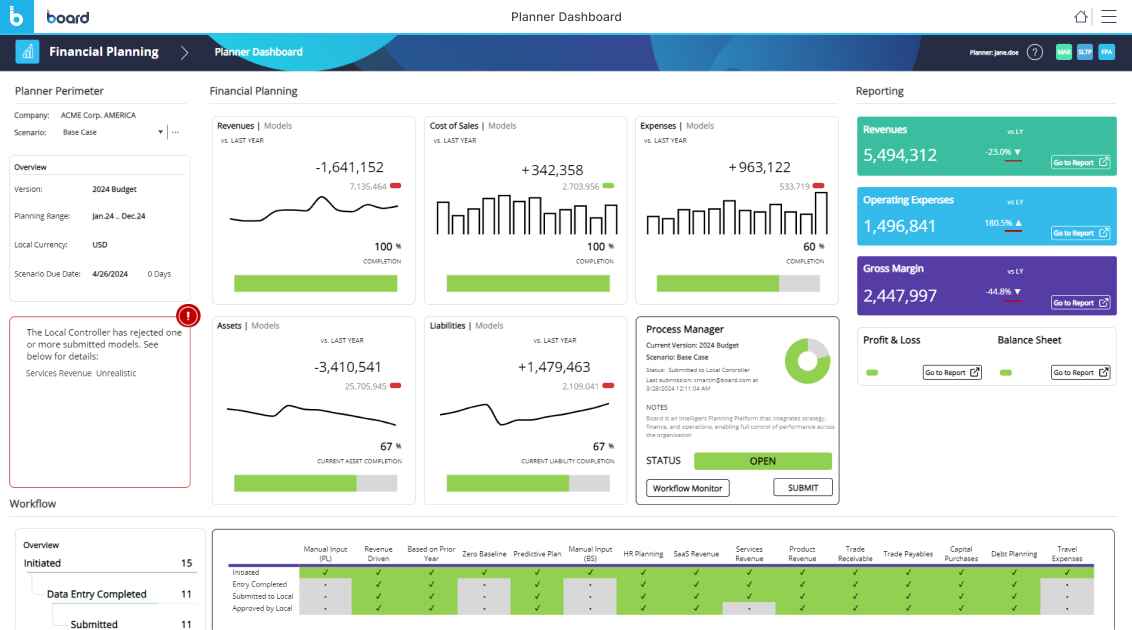
Board’s demand planning software focuses on the flexibility of business users to create, compare, store, and view demand and has a robust data model. It claims to be both spreadsheet-fast and data-modelling with significant strength.
Features
- Scenario planning that develops and contrasts different demand plans in no time.
- Integrated data models allowing coordination across several sources of data into a single planning platform.
- The interface is user-friendly, enabling business users, not just planners, to create and modify models without requiring extensive IT intervention.
Best For: Mid-sized companies or business units where ease of use and flexibility are more important than ultra-deep algorithms.
Logility
Logility describes its demand planning software as designed to create a forecast of future demand for products or services and then produce a demand plan that guides inventory, production scheduling, and other parts of the supply chain. Their emphasis is on helping companies move from spreadsheet-based planning to purpose-built demand planning platforms.
Features
- Statistical algorithm-based automated forecast generation.
- A reviewable forecast and demand plan enables planners to modify forecasts, keep audit trails, and control exceptions.
- Integration with supply chain solutions, forecast-based production planning, and inventory planning.
Best For: Organizations that want a reliable vendor that has a demand planning forecasting emphasis and an established growth strategy.
Now, it’s time to understand, what is the reason why the Canadian manufacturers and distributors should invest in the demand planning forecasting at this time?
Why Demand Planning Matters
Less inventory carrying costs: Through better accuracy in the forecasting organizations decrease safety stock, surplus inventory, and the cost of capital.
Increased service levels and customer satisfaction: Reduced stock-outs and quick fulfilment will result in enhanced customer retention and brand awareness.
Enhanced operational resilience: The demand planning and supply planning will allow the business to react to the changes in the market, supply shocks, and seasonality. Microsoft has a focus on an agile and resilient planning practice.
Integrated supply chain decision-making: When demand planning is connected to procurement, production, and finance, companies learn to better match the spending and resources.
Competitive advantage in Canadian manufacturing/distribution: In Canadian manufacturing, the ability to optimize between demand and supply is a cost and service differentiator.
Futures of Demand Planning
AI & enhanced ML: AI will automatically begin to identify causal drivers, promotional lift, and cannibalization. In addition, top leaders mention demand forecasting as one of the trends.
Connected planning at the end-to-end: Demand planning will be part of integrated supply-chain suites (scenario planning, supply planning, finance). Collaborative and app-based demand planning is being shifted to Microsoft and others.
Real-time and near-real-time updates: The feedback loop with streaming POS and IoT signals is reduced.
Programs and projects in industry (2026): In 2026, numerous manufacturers are initiating demand planning projects to modernize planning by using AI powered demand planning software; this will be quicker in manufacturing and retail.
Conclusion
As we discussed, to achieve low inventory costs, improved service, and a robust supply chain, a modern demand planning solution will be necessary for Canadian businesses that are interested in it. Dynamics 365 Supply Chain Management comes with a built-in demand planning and forecasting, which is standard with D365 Finance and Business Central is thus a good choice among organizations that have already invested in Microsoft technology.
Being a certified partner of Microsoft Dynamics 365 Business Central, Dynamics Square assists businesses to deploy the end-to-end demand planning process. This includes data integration, demand planning techniques, S&OP process design, and implementation and user adoption.
Provided that your team is willing to consider reducing inventory, improving accuracy of the predictions, and updating planning, we offer certified Dynamics 365 implementation, customization, and continued support of Dynamics 365 demand planning solutions.
Get in touch with us at +1 778 381 5388 or info@dynamicssquare.ca, and determine your preparedness and develop an effective roadmap.
People Also Ask:
What is an example of demand planning?
A retail company is used as an example of demand planning where the company uses Microsoft Dynamics 365 Supply Chain Management to anticipate demand during the coming holiday season. The system examines the past sales, promotions, and market trends to forecast demand and make procurement and production decisions.
What are the three major activities of demand planning?
Demand planning has three main activities, which involve:
- Data Collection and Forecasting
- Collaboration & Consensus
- Performance Monitoring
What are the four steps of the demand planning process?
An effective demand planning process consists of four major steps, including:
- Data Gathering
- Demand Forecasting
- Demand Review & Consensus
- Plan Implementation and monitoring
.jfif)
Himank Kochar is a technical content writer at Dynamics Square. With a passion for writing and technology, he focuses on creating clear and informative blogs for readers. He enjoys breaking down complex topics into simple, easy-to-understand ideas. He believes in writing content that adds real value and helps readers make informed decisions.