Do you know where your assets are right now and how effectively they are being used?
If not, your business may be facing hidden challenges.
Table of Contents
- Stages of Asset Tracking
- Top asset tracking software in Canada (2026)
- What is the best asset tracking software?
- Challenges in Asset Tracking
- Risks of Getting Asset Tracking Wrong
- Reasons why Asset Tracking Matters to Canadian Businesses
- Industries That Depend on Asset Tracking in Canada
- How Dynamics Square Helps Canadian Businesses
Assets can be lost, misused, or duplicated without anyone noticing, leading to silent but significant financial losses over time.
Asset visibility is no longer a choice, whether you are a small or a large business in Canada. The use of an asset tracking system must be adopted in the current competitive world. It helps minimize losses, enhance accountability, and make smarter decisions regarding operations.
With the right asset tracking system, you can easily view, administer, and safeguard things that are most important to your business, whether you are running a warehouse in Ontario, a job site in Alberta, or a distribution hub in British Columbia.
To move forward, it is important to understand how asset tracking works and the value it delivers.
This blog explains asset tracking in detail, explores its benefits, stages, risks, and industry use cases, and compares leading asset tracking software solutions available to Canadian businesses. By the end, you will have the clarity needed to choose the asset tracking software that best fits your organization's needs.
Table of Content
What Do You Mean by Asset Tracking?
Asset tracking involves tracking physical assets through their lifecycle of purchase to usage, maintenance, and retirement using digital technology, as opposed to manual records.
Assets can include:
- Equipment and machinery
- Vehicles and trailers
- Medical devices
- IT hardware (laptops, servers)
- Tools, pallets, containers
- Inventory items with long-term value
For Canadian businesses, most of these items also double as depreciable property under the Canada Revenue Agency's Capital Cost Allowance (CCA) system, which means poor visibility into an asset does not just create operational headaches, it can create tax and audit problems too. Machinery and general equipment typically fall under CCA Class 8 (20%), while vehicles and computers usually fall under Class 10 (30%), and low-cost tools under $500 can qualify for the 100% Class 12 deduction. When an asset cannot be located, verified, or matched to its purchase record, claiming the right CCA class becomes guesswork, and guesswork is exactly what a CRA review looks for.
Having known about the asset tracking, now we should speak about how the assets are tracked.
How are assets tracked?
Technologies that can be used to track the assets include:
RFID (Radio Frequency Identification)
A small tag attached to the asset transmits a signal to a nearby reader, without needing a direct line of sight. This makes RFID well suited to warehouses and manufacturing plants across Ontario and Quebec, where hundreds of tools, pallets, or components need to be scanned in bulk as they move through receiving, storage, and shipping.
GPS Asset Tracking
A GPS unit fitted to a vehicle, trailer, or piece of heavy equipment reports its exact location in real time. This is the backbone of fleet and field-asset visibility for logistics firms operating between Toronto, Calgary, and Vancouver, and for construction companies tracking equipment across remote job sites in Alberta and British Columbia.
Barcodes and QR Codes
Printed code is scanned with a handheld device or smartphone at key checkpoints, such as check-in, check-out, or a maintenance visit. It is the lowest-cost option and remains a practical starting point for small and mid-sized Canadian businesses that do not need constant, real-time location data.
Bluetooth Low Energy (BLE)
Small battery-powered beacons broadcast a short-range signal that nearby receivers or mobile devices pick up. BLE tends to work well indoors, for tracking equipment room-to-room in hospitals, offices, or retail locations where GPS signal is unreliable.
IoT Sensors
Beyond location, IoT sensors can report condition data, temperature, humidity, vibration, run hours, or battery health, and push it to the cloud continuously. This matters for cold-chain logistics, food and beverage processing, and healthcare equipment where knowing an asset's condition is as important as knowing where it is.
Note: These technologies deliver information to inventory tracking programs, and by doing so, the businesses can monitor location, status, ownership, condition, and usage in real time. Furthermore, most Canadian organizations do not rely on a single technology; a manufacturer in Ontario might use RFID on the shop floor, GPS on its delivery fleet, and barcodes for smaller tools, all feeding the same asset register, so nothing falls through the cracks.
Key Benefits of Asset Tracking
Asset tracking advantages are important and should be highlighted as follows:
Real-time Visibility: Know where assets are instantly
Operational Efficiency: Staff spend less time searching
Cost Savings: Avoid unnecessary purchases and downtime
Compliance & Reporting: Easy audit trails
Improved Asset Utilization: See what’s used and what’s not
Note: These advantages can be seen in any industry, whether it is the healthcare industry, the logistics industry, or the manufacturing industry.
But now, you are asking, how do I track my assets? Therefore, the steps of asset tracking were discussed below.
Stages of Asset Tracking
Asset tracking is normally systematic. The knowledge of the stages assists businesses to plan efficient tracking methods.
The following are the phases of asset tracking:
Stage 1: Asset Identification
Each asset is assigned to an RFID tag, barcode, or GPS.
Stage 2: Asset Registration
The asset tracking software registers the assets with details such as purchase date, cost, location as well as ownership. This is also the point where the asset should be matched to its correct CRA CCA class and its GST/HST or applicable provincial sales tax (PST in BC, Manitoba, and Saskatchewan; QST in Quebec) should be recorded, so the finance team can claim Input Tax Credits correctly at year-end.
Stage 3: Tracking and Monitoring
The system constantly records location and usage of data.
Stage 4: Analysis and Reporting
The trends, utilization rates, and maintenance requirements are indicated on dashboards and reports.
Stage 5: Optimization and Control
Purchasing, maintenance, and allocation strategies are adjusted according to information in businesses.
Top asset tracking software in Canada (2026)
The following are the best asset tracking systems applied by businesses in Canada in 2026:
Dynamics 365 Business Central
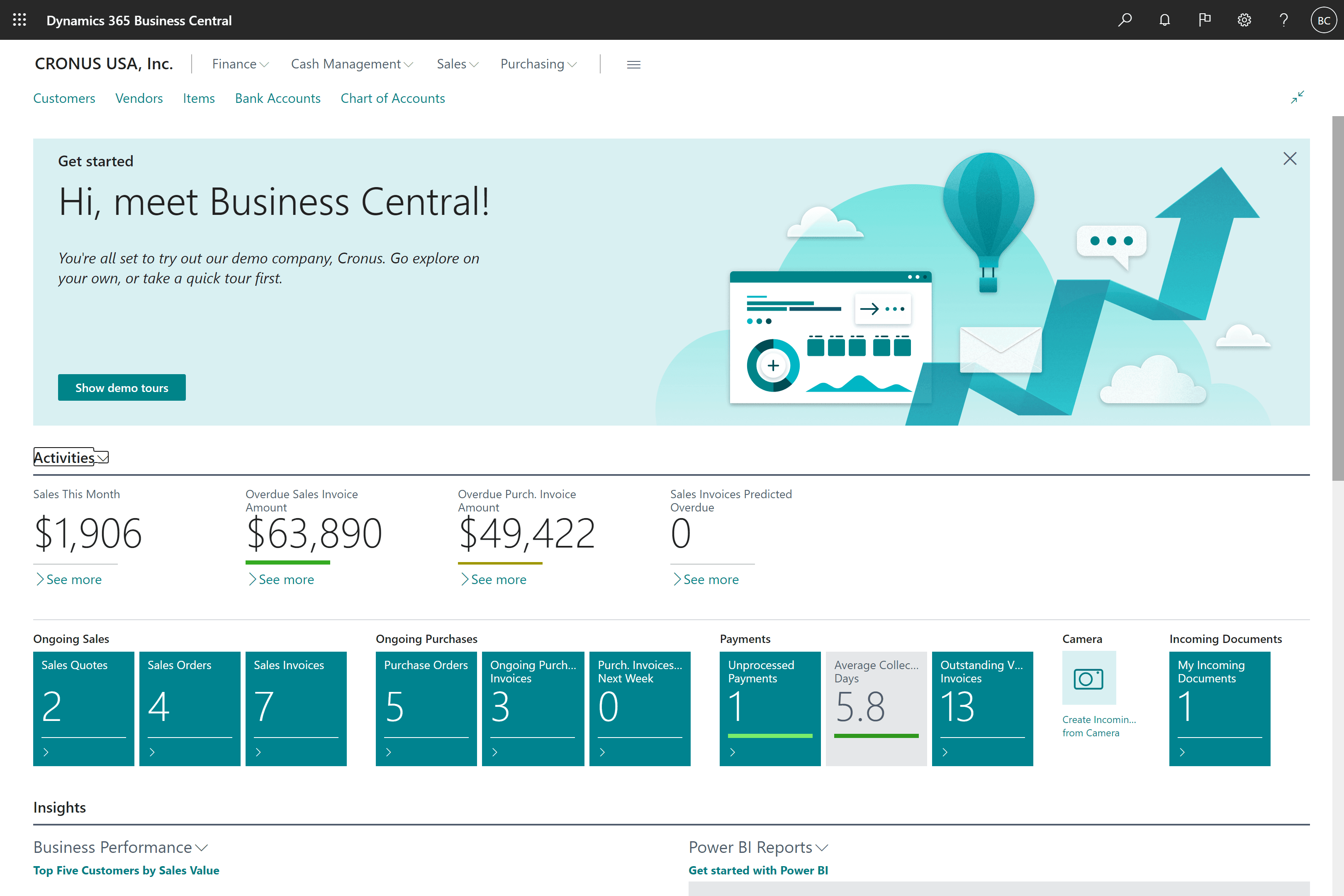
Business Central is a modern, cloud-based ERP platform aimed at small and mid-sized enterprises in Canada. It goes beyond basic asset tracking by combining fixed assets, inventory management, finance, purchasing, and operations into a single system, and it is one of the few platforms built to map cleanly onto CRA CCA classes for Canadian tax reporting.
Key Features
- Fixed asset lifecycle management (acquisition to disposal).
- Integration of assets and inventory tracker.
- Barcode and RFID asset tracking.
- Seamless integration with the Dynamics 365 Supply Chain Management.
- High commitment to D365 Finance and Operations principles.
- On-premises and cloud-based options.
Why It Matters
Close integration between assets, finance, and operations improves compliance, budgeting, depreciation accuracy, and long-term scalability, making it ideal for Canadian companies planning growth.
Asset Panda
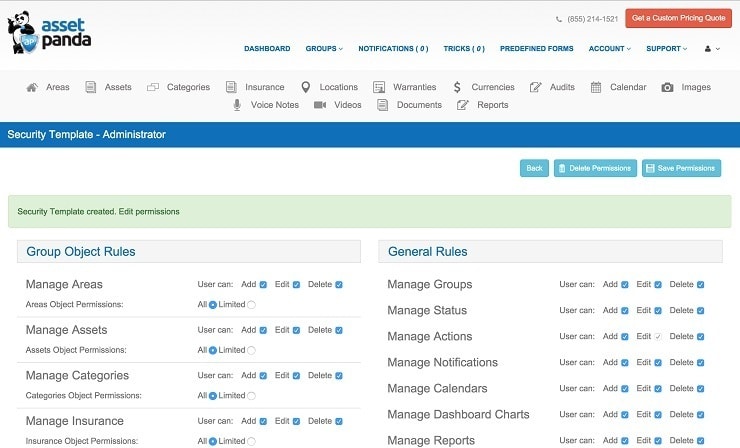
Asset Panda is a cloud-based, flexible, and user-friendly asset tracker. It enables organizations to tailor asset fields, workflows, and reporting without significant technical work. Despite lacking an ERP substitute, it can effectively integrate with accounting and operating systems.
Key Features
- Custom asset fields and workflows
- Mobile-friendly asset tracking
- Maintenance scheduling and alerts
- Reporting and audit history
- Financial integration through API
Why It Matters
Asset Panda can be used by companies that require flexible tracking of assets without implementing a full ERP System.
EZOfficeInventory
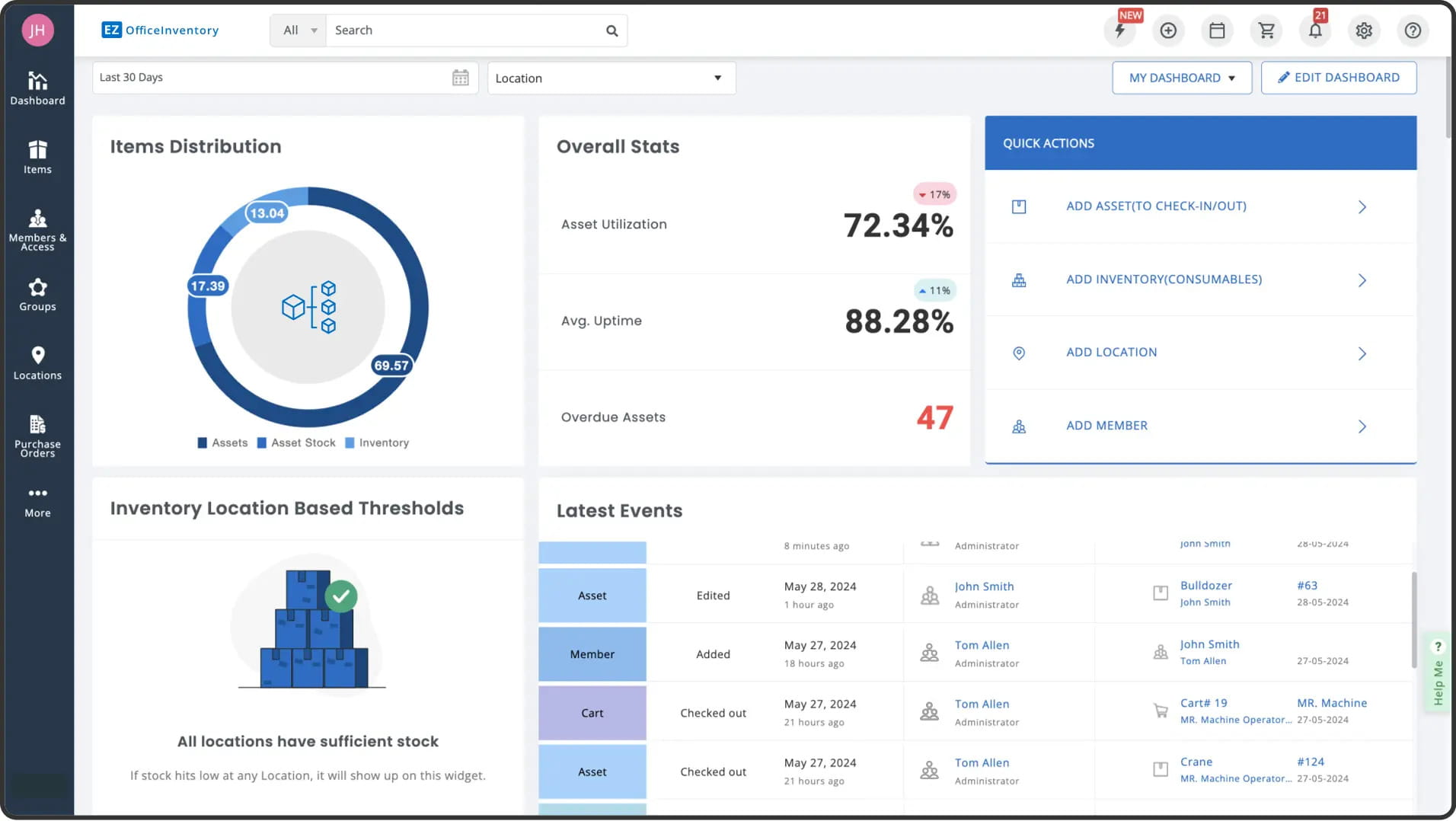
EZOfficeInventory is a complete asset and inventory tracker designed to be used by organizations with large quantities of equipment. It supports short-term and long-term usage of assets; hence, it is common in the fields of construction, education, and rental-based businesses.
Key Features
- RFID asset tracking and barcode scanning
- Asset reservations and check-in/check-out
- Depreciation and lifecycle tracking
- Multi-location asset visibility
- Reporting and analytics
Why It Matters
In organizations that bear a lot of equipment, EZOfficeInventory helps to minimize the loss of assets and maximize their use.
Also Read: Warehouse Scanning System
GoCodes
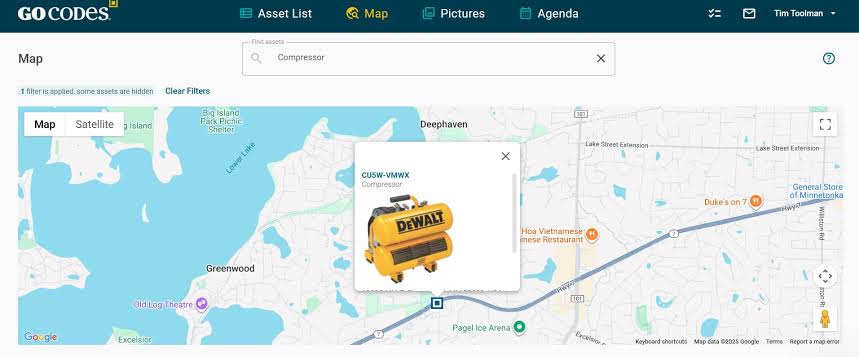
GoCodes is an easy-to-use, GPS-based, asset tracker aimed at small businesses. It uses QR codes in combination with GPS positioning and provides a low-cost means of tracking assets without any complex infrastructure.
Key Features
- QR code and GPS tracking of assets.
- Mobile app for field teams
- Location history and alerts
- Cloud-based dashboard
- Basic reporting
Why It Matters
GoCodes is best suited to a business with rapid asset requirements without the complexity of ERP.
Freshservice
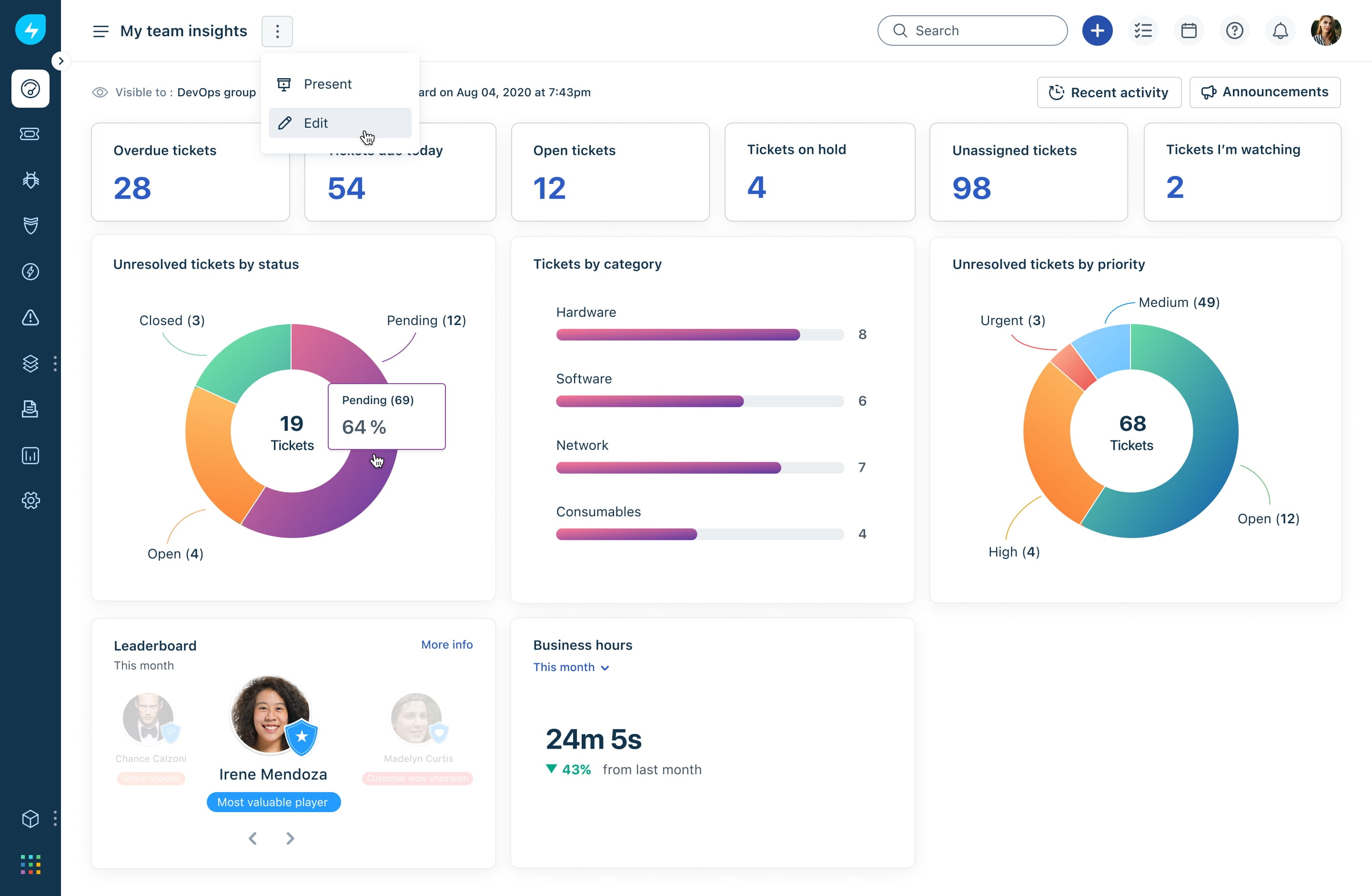
Freshservice is an IT-focused asset tracking and service management platform. IT departments extensively use it to operate hardware, software licenses, and service requests through one interface.
Key Features
- IT asset lifecycle tracking
- Automated workflows
- Software license management
- Reporting and analytics
- Financial systems integration
Why It Matters
Freshservice enhances management of IT assets and brings IT asset utilization in line with service management.
ManageEngine AssetExplorer
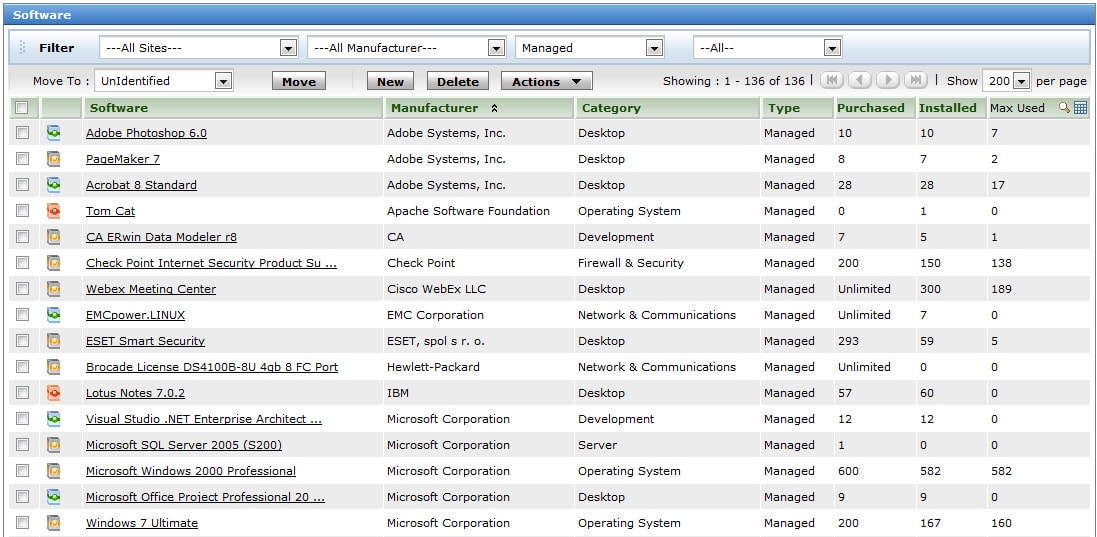
ManageEngine AssetExplorer is an adaptable asset management system that can track IT and non-IT assets. It provides on-premises and cloud deployment; thus, it fits well with the organization that has certain compliance or security requirements.
Key Features
- Asset discovery and inventory
- Tracking of license compliance
- On-premises and cloud deployment
- Reporting and audit trails
- Integration capabilities
Why It Matters
AssetExplorer helps organizations keep proper records and comply with asset-related obligations.
AssetSonar
%2520(1).jpg&w=3840&q=90&dpl=dpl_AePT4PP6RyJRX6EQDP2kowhdR1gd)
AssetSonar is an automated asset management system for IT hardware and equipment. It offers up-to-date information and powerful analytics to enable the teams to realize the asset utilization and performance throughout their reliability.
Key Features
- Real-time asset updates
- Lifecycle and warranty tracking
- Data on analytics and usage
- Cloud-based management
- Accounting system integration
Why It Matters
AssetSonar reduces manual tracking and enhances decision-making. Together with the ERP systems, it enhances the accuracy of the asset data and the financial alignment.
SAP Enterprise Asset Management (SAP EAM)
.png&w=3840&q=90&dpl=dpl_AePT4PP6RyJRX6EQDP2kowhdR1gd)
SAP EAM is a large-scale asset management system implemented with large businesses that have complex asset systems. It takes care of high-level lifecycle planning and IoT-connected asset monitoring.
Key Features
- Enterprise-level asset lifecycle management
- IoT and sensor integration
- Predictive maintenance
- Advanced analytics
- SAP finance and supply chain management software integration
Why It Matters
SAP EAM is suitable for large companies that have advanced asset requirements.
Snipe-IT
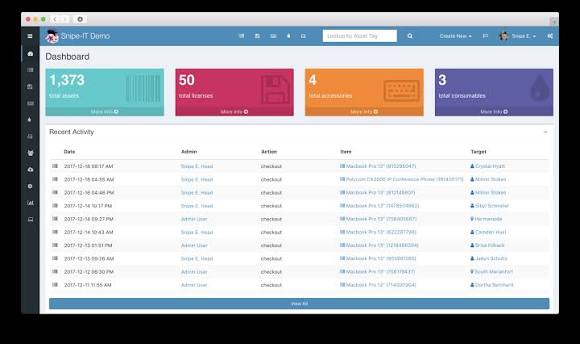
Snipe-IT is an open-source IT asset tracking tool that is mainly applied in IT asset management. It offers low-level asset management at no cost.
Key Features
- IT asset check-in/check-out
- License tracking
- Asset history logs
- Open-source customization
- Web-based access
Why It Matters
Snipe-IT is an excellent entry-level solution for a cost-conscious team. However, it does not feature extensive financial and supply chain integration as the ERP-based solutions do.
UpKeep
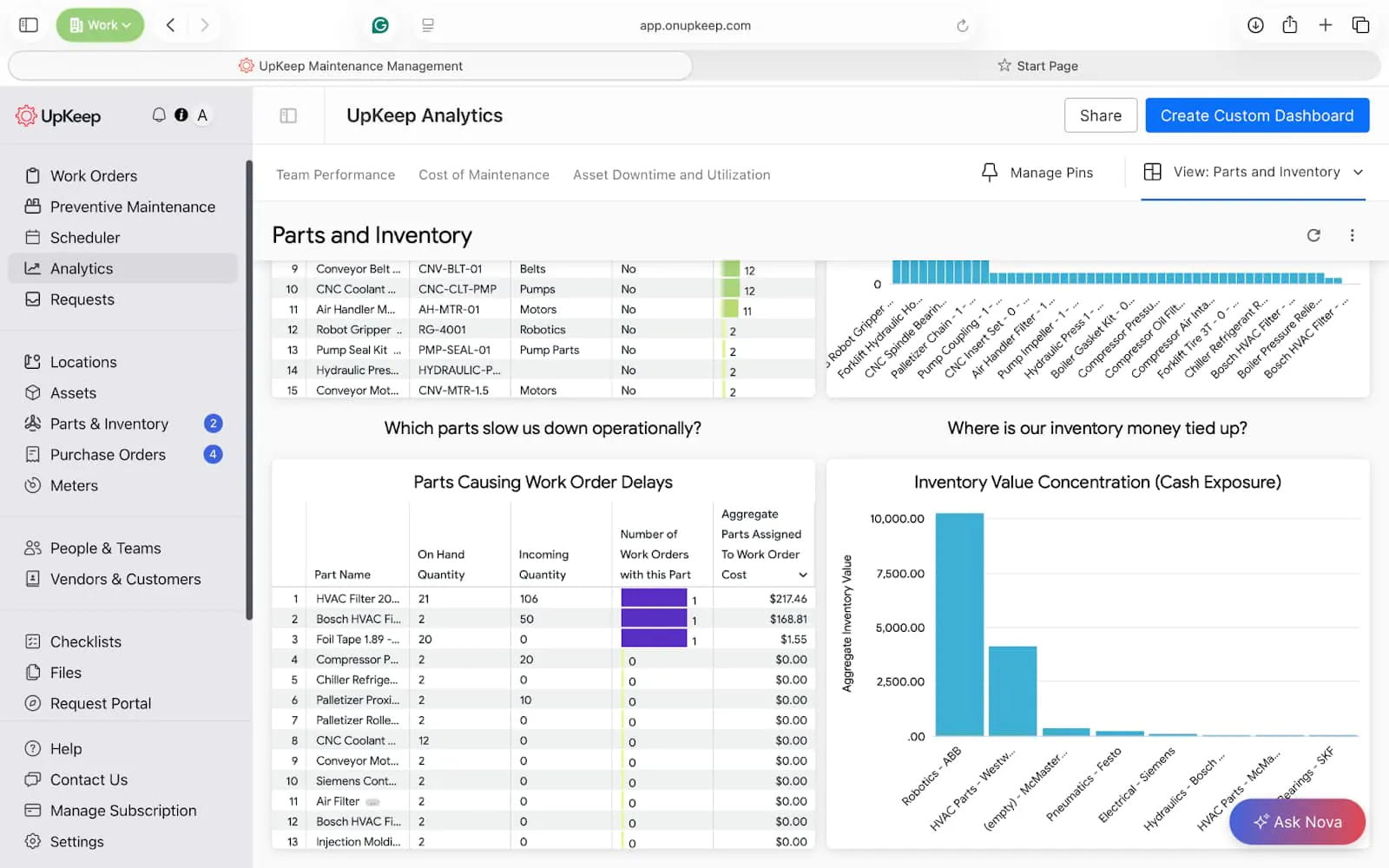
UpKeep is an asset and maintenance management application built on mobile-first. It concentrates on work orders, inspection, and maintenance tracking, and is common in field service and maintenance-intensive industries.
Key Features
- Mobile asset tracking
- Work order management
- Preventive maintenance notifications.
- Real-time dashboards
- Reporting tools
Why It Matters
UpKeep enhances maintenance productivity and reliability of assets. It can be used with finance or ERP systems to help control costs and track asset performance.
After discussing the top solution, now the question arises: what is the best asset tracking software among all the software?
What is the best asset tracking software?
As we know, Microsoft Dynamics 365 Business Central can be viewed as the most complete solution in the financial integration, compliance, and scalability of Canadian SMBs.
Furthermore, for large enterprises that manage complex asset lifecycles, Microsoft Dynamics 365 Finance and Supply Chain Management (formerly D365 Finance and Operations) is the best choice.
It supports advanced depreciation, regulatory compliance, and large-scale supply chain operations while keeping financial value, asset usage, and operational data aligned in real time, whether you are managing assets from a head office in Toronto or a regional site in Calgary.
Challenges in Asset Tracking
Even with the best tools, companies face hurdles:
Implementation Costs: hardware and software investment. (Canadian businesses should also watch for tariff-driven cost increases on imported RFID tags, GPS units, and sensors, which have been pushing up hardware pricing across North America).
Integration Complexity: tying into ERPs like Dynamics 365.
Tagging Consistency: all assets must be labelled correctly.
Data Overload: too much unstructured data without analytics.
Note: All these challenges can be transformed into opportunities to smooth operations with the right partner like Dynamics Square.
Now, we are going to discuss why asset tracking matters to Canadian businesses.
Risks of Getting Asset Tracking Wrong
As we know, asset tracking is a risk-management function. When it’s done poorly, or not at all, the exposure shows up in places that go well beyond a missing laptop or a misplaced tool.
Financial and Shrinkage Risk
Untracked assets are far easier to lose, misplace, or have quietly walked off a job site. Over a year, that shrinkage adds up, and it is a cost that rarely shows up as a single line item, which is exactly why it goes unnoticed until a stock count or audit forces the issue.
Tax and CRA Audit Risk
Every depreciable asset needs to sit in the correct CCA class and carry a paper trail back to its purchase date, cost, and GST/HST or PST paid. If an asset cannot be located or its records do not match what's been claimed, it can trigger CRA questions during a review, and in the worst case, a reassessment, recapture of previously claimed CCA, or denial of an Input Tax Credit.
Insurance and Disposal Risk
Insurers generally expect a business to be able to produce an accurate asset register after a loss, theft, or damage claim. Gaps in that register can slow down a claim or reduce a payout. The same applies at disposal: assets that are scrapped, sold, or written off without proper documentation can create discrepancies at year-end that a bookkeeper or auditor later must unwind.
Privacy and Compliance Risk with GPS and Connected Tracking
Once tracking extends to vehicles, mobile devices, or anything tied to an employee's movement, it stops being a purely operational question and becomes a privacy one. In Canada, GPS and electronic monitoring of employees fall under a patchwork of federal and provincial rules: PIPEDA applies to federally regulated employers, while British Columbia, Alberta, and Quebec each have their own private-sector privacy legislation. Ontario employers with 25 or more employees are also required under the province's Employment Standards Act to maintain a written Electronic Monitoring Policy that discloses what is tracked (GPS, devices, communications), why, and when. Businesses that roll out GPS or IoT-based fleet tracking without addressing this can end up with a compliance gap rather than just an operational one.
Cybersecurity Risk
RFID readers, GPS units, and IoT sensors are all connected devices, and connected devices are attack surfaces. An asset tracking system that is not properly secured can expose location data, ownership records, or, in more serious cases, become an entry point into a broader network.
Note: None of this is a reason to avoid asset tracking, quite the opposite. A properly implemented system, aligned with CRA record-keeping expectations and Canadian privacy law, is what turns these risks into a controlled, auditable process instead of an open liability.
Now, we are going to discuss why asset tracking matters to Canadian businesses.
Reasons why Asset Tracking Matters to Canadian Businesses
Asset tracking not only concerns the location of things but also has a direct influence on cost control, compliance, and growth.
Loss and Theft Prevention
Lost or stolen assets silently drain profits. GPS asset tracking and RFID asset tracking provide visibility that reduces shrinkage.
Better Asset Utilization
Most organizations purchase equipment that they already own simply because they cannot locate it. Asset tracking eliminates this wasteful duplication.
Maintenance and Lifecycle Management
Tracking usage hours and conditions enables preventive maintenance, extending asset life and reducing downtime.
Compliance and Audits
Canadian businesses face strict regulatory and financial reporting requirements, from CRA capital cost allowance records to GST/HST and provincial sales tax (PST/QST) documentation. Asset tracking systems maintain proper asset histories for both internal and CRA audits.
Smarter Business Decisions
As financial systems, such as Business Central and D365 Finance and Operations, incorporate asset data, leaders across Canada, from Vancouver to Montreal, can gain insights that support forecasting and planning.
Industries That Depend on Asset Tracking in Canada
Some of the key sectors where real time asset tracking solutions are particularly useful include:
Healthcare Asset Tracking Software: Hospitals in Ontario and British Columbia monitor wheelchairs, infusion pumps, ventilators, and diagnostic equipment so that staff spend less time searching and more time on patient care.
Manufacturing and Warehousing: Tools, machinery, pallets, and raw materials across facilities in Ontario’s manufacturing corridor and Alberta’s industrial hubs are tracked by asset and inventory management software.
Construction and Infrastructure: GPS asset tracking is applied to make sure that heavy equipment on job sites, from Calgary to the Lower Mainland of British Columbia, is utilized productively in the field.
Logistics and Transportation: Fleet and trailer tracking enhance the route planning and security of assets moving between Toronto, Calgary, and Vancouver.
Retail and IT Services: The improvement of lifecycle control and budgeting is achieved through tracking of IT hardware and store equipment across Canada retail chains.
How Dynamics Square Helps Canadian Businesses
Dynamic Square, being a Microsoft Dynamics partner, will be able to assist Canadian businesses:
- Integrate asset tracking with D365 Finance and Operations
- Customize Business Central to fit workflows unique to your business, whether you're based in Ontario, Alberta, or British Columbia
- Training, support, and maintenance
- Integrate asset tracking with inventory, supply chain and warehouse management system
- Provide real-time information and automatic reporting
Moreover, as a Business Central Partner in Canada and a trusted Dynamics CRM Partner in Ontario, Toronto, and British Columbia, Dynamics Square Canada guides Canadian organizations every step of the way, whether you're implementing asset tracking from scratch or optimizing an existing system.
You may contact us at +1 778 381 5388 and write to us at the email address: info@dynamicssquare.ca.
People Also Ask:
What are the 5 P's of asset management?
- Planning
- People
- Processes
- Performance
- Portfolio
What is asset tracking in healthcare?
Healthcare asset tracking software allows staff to find life-critical equipment (infusion pumps, ventilators, and defibrillators) in a short period of time. It saves time and enhances delivery of care to patients.
.jfif&w=3840&q=75&dpl=dpl_AePT4PP6RyJRX6EQDP2kowhdR1gd)