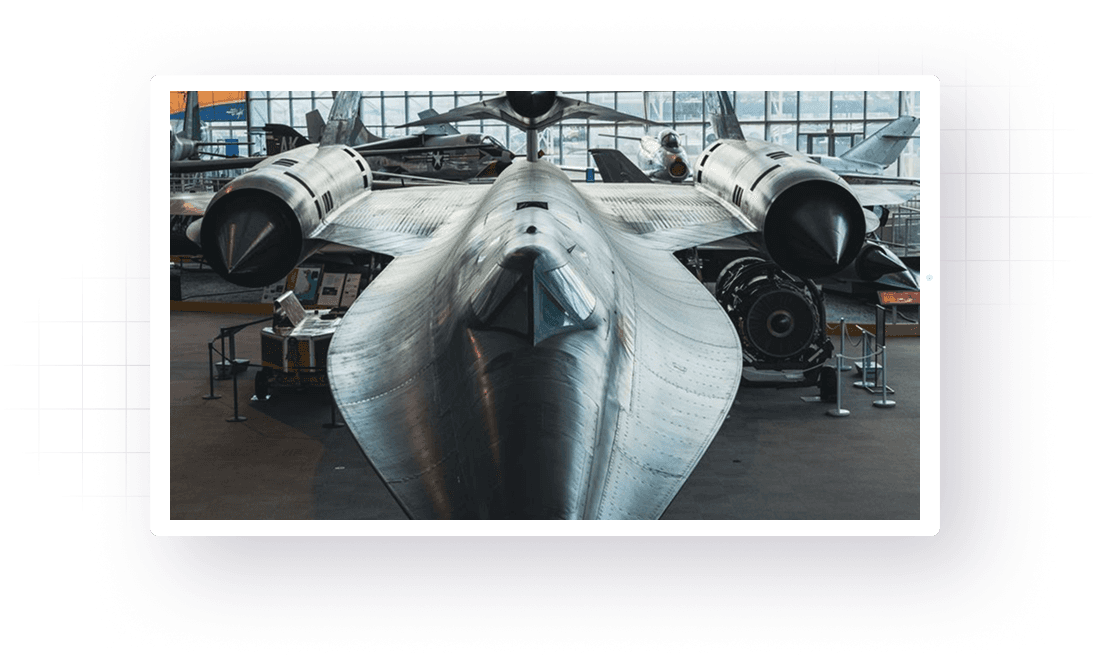
Why Aerospace and Defence Manufacturers Trust Us
60+
Implementations in Manufacturing
35+
Manufacturing and Supply Chain Consultants
14+
Years Serving Canadian Manufacturers
Dynamics 365 ERP for Aerospace and Defence Manufacturing: Business Central or Supply Chain Management
Dynamics Square suggests two ERP systems for aerospace and defence manufacturers: Business Central and Supply Chain Management. Both connect purchasing, production, inventory, quality checks, and accounting. The right choice depends on your company size, product complexity, production sites, and engineering requirements.

Dynamics 365 Business Central
Business Central is a natural choice for precision machining shops, wire and cable manufacturers, metal fabricators, and smaller component suppliers. It helps manage customer orders, production steps, material tracking, quality checks, and manufacturing costs without the complexity of a larger ERP system.
Explore Business Central
Dynamics 365 Supply Chain Management
Supply Chain Management supports larger aerospace and defence manufacturers with multiple factories, complex products, and frequent design changes. It provides advanced production planning, engineering change management, project-based manufacturing, and capacity scheduling to manage demanding production requirements.
Explore Supply Chain ManagementAS9100 certification, customer approvals, and Canadian defence security compliance remain the responsibility of your business. Dynamics 365 helps maintain the production records, material history, and controlled processes needed to support audits and customer reviews.
Talk to Us About Your Manufacturing ProcessWhat Compliance Requirements Must Aerospace and Defence Manufacturing ERP Meet in Canada?
Aerospace and defence manufacturers in Canada must maintain records covering controlled goods, cyber security, and export permits. These requirements affect how businesses manage parts, customer information, production records, and shipments. An ERP system helps organise this information, control access to sensitive records, and retrieve the details needed during government inspections and customer audits.
The Controlled Goods Program
Public Services and Procurement Canada manages the Controlled Goods Program. Canadian businesses that examine, possess, or transfer controlled goods or technology must register when required. Registered businesses must maintain records of controlled items, employee security assessments, transfers, and disposals. An ERP system can connect part numbers, customer details, inventory movements, and shipment records to help retrieve this information when required.
The Canadian Program for Cyber Security Certification
The Canadian Program for Cyber Security Certification introduces cyber security requirements for businesses supplying Canada's defence sector. Manufacturers must understand where sensitive contract information is stored and which employees can access it. During ERP implementation, businesses should review user permissions, system access, and information handling. Dynamics 365 can support access controls, while wider security requirements need appropriate policies and safeguards.
Export Permits
Global Affairs Canada issues permits for exporting controlled military and strategic goods from Canada. Businesses must identify the items being shipped and ensure the required export permits are in place. Controlled Goods Program registration is also required before an export permit can be issued for transfers outside Canada. Accurate part classifications, customer details, and shipment records help connect each export permit with the goods shipped.
What Dynamics 365 Needs to Do for Aerospace Manufacturers
Dynamics 365 ERP for aerospace manufacturing connects materials, components, production, inspections, and customer deliveries. It helps manufacturers answer important questions about every part: which materials were used, which design revision was followed, and who checked the finished component. These records support traceability, quality control, engineering changes, and customer audits during manufacturing and throughout later product servicing.
Bills of Materials
A bill of materials lists the parts and subassemblies needed to build a finished product. Dynamics 365 supports multi-level lists, so each assembly can contain smaller assemblies and individual components. Teams can manage approved versions and check where a component is used. This helps identify which products may be affected when a part or specification changes.
Part and Material Traceability
Dynamics 365 records lot and serial numbers as materials move from receiving through production and delivery. Teams can trace a finished component back to the material batch used to make it. They can also search for a supplier batch and identify the finished units that contain it. This helps investigate defects and respond to customer or audit requests.
Engineering Changes and Revision Control
When an engineering design changes, the updated version must be reviewed before production uses it. Dynamics 365 Supply Chain Management supports a controlled process for requesting, reviewing, approving, and releasing design changes. This helps purchasing, planning, and production teams work from the same approved specifications and reduces the risk of building parts to outdated drawings.
Engineer-to-Order Manufacturing
Some aerospace components are designed or adapted after a customer places an order. Dynamics 365 can connect this engineer-to-order work with project budgets, production activities, and delivery milestones. Teams can follow the costs and progress of each project, including the work needed to complete a specific customer design. This helps keep custom manufacturing work organised and financially visible.
Quality Checks and Inspections
Dynamics 365 helps manufacturers record inspection results, quality issues, and corrective actions against the relevant materials or production orders. If a batch or component raises concern, teams can place it on hold while they investigate. Keeping inspection and nonconformance records together helps identify affected products, document decisions, and provide evidence during customer reviews and audits.
Supplier and Outsourced Process Tracking
Aerospace manufacturers often send parts to specialist suppliers for processes such as plating, heat treatment, or testing. Dynamics 365 can record these outsourced steps within the production order. Teams can track which materials or components were sent, which supplier received them, and what was returned. The supplier's charges can also be included in the job's production cost.
Business Central vs. Supply Chain Management for Aerospace and Defence Manufacturing
The sections above should help you identify the right ERP for your business. The comparison table below explains the differences in more detail, making it easier to review your requirements or discuss them with your team.
| Aspects/Parameters | Business Central | Supply Chain Management |
|---|---|---|
| Best suited to | Machine shops, assemblers, lower-tier suppliers | Design-led builders, multi-site suppliers |
| Manufacturing style | Discrete and repetitive (Premium licence) | Discrete, configured and project-linked |
| BOM control | Multi-level production BOMs with versions | Product versioning with change requests and orders |
| Lot and serial tracking | Item tracking and Item Tracing | Batch and serial tracking across production |
| Engineer-to-order | Order-linked planning, job accounting alongside | Projects with work breakdown structures on production orders |
| Quality management | Native inspections and lot holds | Quality orders, nonconformance and sampling |
| Multi-entity scale | Several companies and locations, with simpler consolidation | Multiple entities, sites and currencies at larger scale |
| Starting licence (Canada) | Premium: $149.20 CAD/user/month | Standard: $284.90 CAD/user/month |
Business Central Premium is a practical option for manufacturers producing parts from approved drawings and handling repeat customer orders. It provides essential production, inventory, costing, and traceability features at a price suited to many mid-sized businesses. Supply Chain Management is a better choice when designs change during projects, revisions need formal approval, or customer payments follow project milestones.
Design drawings usually remain in specialist PLM or PDM software, while dedicated quality tools may prepare reports such as AS9102 first article inspection records. Dynamics 365 connects with these systems and manages materials, production, and costs. Dynamics Square identifies these software requirements during the initial assessment to avoid unexpected integration work later.
Get a Platform RecommendationHow Does Dynamics Square Help You Find the Right Fit
The right ERP for aerospace and defence manufacturing depends on how your business operates. A machine shop producing parts from approved drawings has different needs from a manufacturer developing products to meet customer specifications. Choosing the wrong system can increase implementation costs and create problems that require additional work later.
Dynamics Square assesses your manufacturing requirements before recommending Business Central or Supply Chain Management. We review your product structures, design changes, contract requirements, number of production sites, and existing software connections. This helps us recommend a system that matches your operations without adding unnecessary features or costs.
Book Your Free Fit Assessment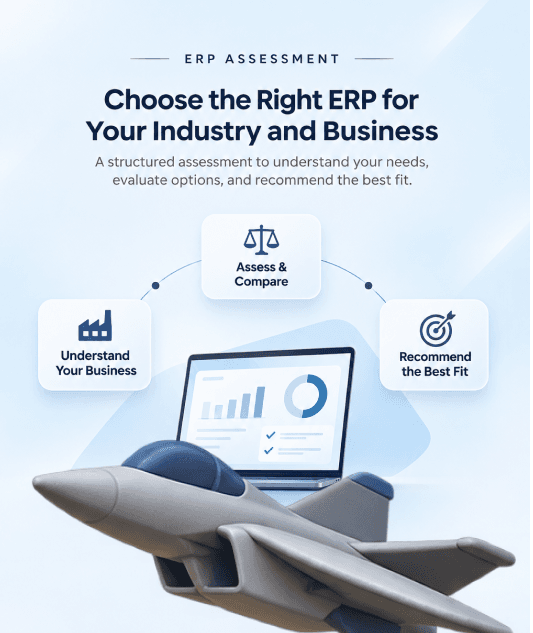
Aerospace and Defence ERP Implementation in Canada: How Dynamics Square Does It
Dynamics Square follows Microsoft's Success by Design approach across five stages when implementing Dynamics 365 for Canadian aerospace and defence manufacturers. We also decide early where engineering drawings, quality records, and sensitive contract information will be stored and managed.
Discover
Dynamics Square reviews your assemblies, material tracking, production processes, and outsourced work to understand your requirements before configuring the ERP system.
1
2
Initiate
Dynamics Square defines the project scope, recommends Business Central or Supply Chain Management, and assigns responsibilities for managing data, approvals, and implementation decisions.
Implement
Dynamics Square configures production, inventory, costing, and traceability, transfers existing records, and connects the ERP with your engineering, quality, and shop-floor systems.
3
4
Prepare
Dynamics Square trains your employees, tests the system using actual part numbers, checks material traceability, and prepares your team for the final changeover.
Operate
Dynamics Square continues supporting your business after launch, helping manage customer audits, engineering changes, new programmes, and changing production requirements.
5
Dynamics 365 ERP Pricing for Aerospace and Defence Manufacturing
The prices below reflect Microsoft's published list rates in Canadian dollars. Your total cost depends on the number and type of user licences, connections to engineering and quality software, and implementation requirements. Dynamics Square reviews these details with you before preparing a project-specific quote.
Business Central
Essentials
From $108.50CAD/user/month
Finance, sales, purchasing and inventory basics
Premium
From $149.20CAD/user/month
Essentials plus production orders, BOMs, routings, MRP and inspections on production output
Team Members
From $10.90CAD/user/month
Light access for approvals and self-service tasks
Supply Chain Management
Standard
From $284.90CAD/user/month
Engineering change management, product configuration, project-linked production and advanced quality tools, with limited demand planning
Premium
From $407.00CAD/user/month
Standard plus full demand planning, capacity and storage planning, and Copilot Credits
Implementation is a separate line from licensing. Its scale follows the number of plants, how deep your BOMs go, how much work is engineered to order and how much data must move.
Get a Custom QuoteWhy Canadian Aerospace and Defence Manufacturers Choose Dynamics Square
Dynamics Square’s manufacturing experience supports every implementation. We have completed 60+ manufacturing ERP implementations, backed by 35+ manufacturing and supply chain consultants with practical industry knowledge.
We begin with your traceability requirements. Dynamics Square examines how customers need to track each part, serial number, material batch, and design revision before configuring your ERP system.
You receive a recommendation based on your engineering needs. We explain whether Business Central or Supply Chain Management fits your operations, even when the simpler option requires less implementation work.
Our consultants hold certifications across both Microsoft platforms. Their practical experience helps compare both systems and recommend the right solution for your aerospace and defence operations.
Our support continues long after your ERP goes live. Dynamics Square helps manage customer audits, engineering changes, and new programmes as your production requirements and business operations grow.
We understand the requirements of Canadian manufacturers. More than ten years of project experience helps us address bilingual documentation, provincial tax differences, and security requirements for controlled goods.
Frequently Asked Questions
Yes, Dynamics 365 helps Canadian aerospace and defence manufacturers manage production, material tracking, engineering changes, quality checks, and programme costs. Business Central is a practical option for manufacturers producing parts from approved customer drawings. Supply Chain Management is better suited to businesses handling frequent design changes, complex products, or multiple factories. Specialist PLM and quality software can connect with either system.
Dynamics 365 manages complex product structures by organising components into several levels. Business Central allows one production bill of materials to contain smaller bills for subassemblies and individual parts. Teams can manage approved versions and check which products use a particular component. Supply Chain Management adds engineering change orders to control design updates before revised parts enter production.
Dynamics 365 tracks materials and finished components using lot and serial numbers. These records follow parts through receiving, production, inventory, and customer shipments. Business Central supports tracing in both directions, from supplier materials to finished products and from delivered parts back to their original batches. This helps manufacturers investigate defects, respond to customer queries, and prepare traceability records for audits.
Yes, Supply Chain Management supports complex aerospace projects where designs and production requirements develop around customer orders. It connects manufacturing activities with project budgets, work stages, and milestone billing. Business Central can manage simpler custom orders through production planning and job costing. Dynamics Square reviews your project complexity and engineering processes before recommending either system.
Dynamics 365 helps manufacturers record material inspections, production checks, quality issues, and corrective actions. Business Central supports inspections when materials arrive and products are completed. Supply Chain Management adds quality orders, sampling plans, and nonconformance management. Businesses seeking AS9100 certification or preparing AS9102 first article inspection reports may also need specialist quality software. Certification and customer approvals remain the manufacturer's responsibility.
Important note: Dynamics 365 helps maintain the records and processes that support aerospace and defence compliance. It does not automatically provide AS9100 certification, export permits, or Controlled Goods Program registration.
Build With the Traceability Your Customers Expect
Keep part-level records, change control and program costing in order for the next customer audit.
Book a Free Consultation Today