Why Packaging Manufacturers Trust Us
60+
Implementations in Manufacturing
35+
Manufacturing and Supply Chain Consultants
14+
Years Serving Canadian Manufacturers
Dynamics 365 ERP for Packaging Manufacturing: Business Central or Supply Chain Management
Dynamics 365 ERP for packaging manufacturing connects customer quotes, orders, materials, production, quality checks, deliveries, and accounts in one system. It helps businesses track paper, board, film, ink, and finished goods while monitoring job costs and material waste. For example, a film plant using 40 tonnes weekly loses 1.2 tonnes if 3% becomes waste. That adds up to around 62 tonnes each year.
Dynamics Square offers Business Central and Supply Chain Management, depending on product complexity, order patterns, and the number of production sites.

Dynamics 365 Business Central
Business Central works well for carton printers, label makers, corrugated packaging plants, and flexible or rigid packaging manufacturers. It supports businesses with standard products and one or a few production sites. Key features include production orders, material lists, production steps, product variants, order-based planning, blanket orders, outsourced work, batch tracking, and quality inspections.
Explore Business Central
Dynamics 365 Supply Chain Management
Supply Chain Management supports larger packaging businesses with multiple factories, complex customer requirements, and reel-based production. It helps manage custom product options, large material rolls, and production capacity. Its features include co-product and by-product tracking, catch weight, quality checks, equipment maintenance, advanced warehouse management, and production scheduling.
Explore Supply Chain ManagementFood manufacturers, retailers, and brand owners often ask packaging suppliers for audit reports, test results, and certificates. Dynamics 365 maintains the material, batch, and production records needed to support these documents.
Match My Plant to a ProductWhat Compliance Requirements Must Packaging Manufacturing ERP Meet in Canada?
Canadian packaging manufacturers must maintain records for environmental reporting, food safety, packaging materials, and customer audits. These requirements vary by province and product type. An ERP system helps businesses organise material details, production records, batch information, and shipment data needed to answer customer and regulatory questions.
Provincial Packaging Producer Responsibility
Canadian provinces have separate programmes that make producers responsible for packaging waste. Ontario's Blue Box Regulation, for example, requires certain businesses to report packaging quantities by material type. Quebec, British Columbia, Manitoba, Saskatchewan, and Nova Scotia also have their own programmes. Packaging manufacturers should record material types and weights for each product, helping brand owners prepare accurate reports.
Federal Plastics Registry
Environment and Climate Change Canada requires certain businesses to report plastic production and use through the Federal Plastics Registry. Reports include plastic types, resin categories, recycled content, and quantities measured in kilograms. Some smaller businesses qualify for exemptions. Packaging manufacturers should maintain records of resin purchases, material consumption, and production quantities to help customers and reporting businesses prepare accurate submissions.
Food Packaging Requirements
Canadian food packaging must meet safety requirements under the Food and Drug Regulations. Packaging materials must not release harmful substances into food during normal use. Health Canada may issue a Letter of No Objection after reviewing submitted material information, although this is not a formal legal approval. Packaging manufacturers should retain material specifications, supplier details, and batch records to support food safety checks.
Environmental Claims
The Competition Act requires businesses to support environmental claims with reliable evidence. This applies to statements about recycled content, recyclability, and the environmental benefits of products or business activities. Packaging manufacturers should maintain records showing the materials used and their recycled content. Linking supplier information, material batches, and production orders helps businesses provide evidence when customers or regulators question environmental claims.
Customer Audit Schemes
Food and consumer goods companies often ask packaging suppliers to demonstrate consistent quality and material traceability. Many buyers look for certification under BRCGS Packaging Materials, which includes requirements for product safety and quality management. Issue 7 requires an annual traceability test to be completed within four hours. Linking material batches, production orders, and customer deliveries helps teams retrieve the required records quickly.
What Dynamics 365 for Packaging Manufacturing Needs to Do
A good packaging ERP should help you trace every finished pallet back to its materials, production process, and quality checks. It should also show what each job costs, how much material it wastes, and whether production meets delivery dates. The following capabilities help packaging manufacturers manage these tasks.
Quotes and Make-to-Order Jobs
Business Central can create production orders directly from confirmed customer orders. This keeps the customer's requirements connected to the materials, production work, and finished goods. Sales Order Planning also helps teams identify what they need to purchase or manufacture. This gives packaging manufacturers a clear record from the first quote through production and final delivery.
Specifications and Product Options
Business Central uses item variants to manage different product sizes, materials, and print versions. For more complex products, Supply Chain Management offers configuration models that check customer selections against defined rules. Each approved combination can generate its own material list and production steps, helping manufacturers manage customised packaging without repeatedly creating product details.
Reel, Sheet and Material Tracking
Dynamics 365 assigns batch numbers to incoming materials such as board, film, foil, ink, and adhesives. Production records show which batches went into each order and which finished products came out. Teams can trace a supplier's material batch to customer deliveries or investigate a complaint by checking the materials used for that product.
Units of Measure and Weight
Packaging manufacturers purchase and use materials in different units, including kilograms, sheets, reels, and square metres. Dynamics 365 supports these units and their conversions, helping teams maintain accurate stock records. Supply Chain Management also supports catch weight, which records both quantity and weight when individual rolls or packages vary in size.
Production Capacity and Scheduling
Dynamics 365 helps plan production across presses, die cutters, and laminators. Each machine can have its own working hours and production capacity, while material planning helps teams decide what to buy and manufacture. Supply Chain Management adds more detailed scheduling, helping planners allocate jobs according to available machine time and material stock.
Outsourced Production Work
Packaging manufacturers often send materials to outside suppliers for printing, lamination, foil work, or die cutting. Business Central can record these activities as outsourced production steps. The work remains linked to the original production order, helping teams track materials sent to suppliers, completed services, and related costs.
Dies, Plates and Machine Maintenance
Presses, cutting dies, and printing cylinders need regular maintenance to keep production running. Supply Chain Management helps businesses record equipment details, schedule maintenance, and track repair costs. Maintenance can be planned for specific dates or equipment usage, such as the number of printing impressions. Business Central can track equipment as fixed assets or connect with specialist maintenance software.
Setup Waste, Trimming and Scrap
Packaging production creates waste during machine setup, cutting, and finishing. Dynamics 365 helps teams record expected material losses and compare them with actual scrap. Operators can enter waste quantities and reasons during production, while reports show losses by job, machine, and cause. Supply Chain Management can also return reusable leftover material to stock.
Quality Checks and Product Release
Business Central's Quality Management module, introduced in the 2026 release wave, supports inspections when materials arrive and products are completed. Businesses can hold stock that fails inspection until the issue is resolved. Supply Chain Management provides additional quality features, including inspection plans, sampling, and records of products that fail required checks.
Forecasting and Production Reports
Business Central helps manufacturers forecast demand for individual products and plan stock replenishment. Power BI and Excel can use Dynamics 365 data to create reports on production, material usage, waste, and sales. This gives managers a clearer view of job costs, customer profitability, machine performance, and material consumption across the business.
Business Central vs. Supply Chain Management for Packaging Manufacturing
The following comparison highlights the key differences between Business Central and Supply Chain Management for packaging manufacturing. Use the table to compare their features against your production needs and business requirements.
| Aspects/Parameters | Business Central | Supply Chain Management |
|---|---|---|
| Best suited to | Carton, label, corrugated sheet, flexible and rigid container converters at one site or a few | Multi-plant converters, configure-to-order sellers, web and reel-slitting operations |
| Order handling | Planning driven by customer orders, with links to production and blanket orders | Product configuration models, with configured items on quotations |
| Production style | Production orders with BOMs and routings on the Premium licence | Discrete production alongside formula-driven process manufacturing |
| Material units | Reel, sheet and weight conversions via units of measure | Catch weight items follow count and weight together |
| Planning | MRP and calendars attached to work and machine centres | Master planning, finite capacity scheduling and Production Gantt chart |
| Waste handling | Allowances on BOM and routing lines; scrap codes when output posts | Scrap on formula and BOM lines; co-product and by-product cost sharing |
| Outside processing | Subcontracting | Subcontracting plus broader warehouse and execution tools |
| Die and press upkeep | Fixed asset records, or a partner maintenance app | Asset Management with counters triggering maintenance plans |
| Quality | Quality Management with the option to block a lot | Quality orders, sampling plans and non-conformance cases |
| Scale | A single mid-sized operation | Several entities, sites and currencies |
| Starting licence (Canada) | Premium: $149.20 CAD/user/month | Standard: $284.90 CAD/user/month |
Business Central Premium works well for packaging manufacturers producing standard products against customer orders at one or a few sites. Supply Chain Management is a better choice for businesses making customised packaging, cutting large reels into smaller rolls, managing complex production schedules, or operating across several companies.
Specialist software often handles product estimates and artwork, while Dynamics 365 manages purchasing, stock, production, and accounts. Both systems exchange information to keep job details connected. During discovery, Dynamics Square also identifies the machines, printers, cameras, and weighing equipment that need connecting and agrees what information they share with the ERP.
Get a Platform RecommendationHow Does Dynamics Square Help You Find the Right Fit
A label converter handling short runs, a corrugated box plant producing large orders, and a packaging group operating across two provinces have different needs. Dynamics Square studies your production methods and business requirements before recommending Business Central or Supply Chain Management.
We assess your product range, repeat orders, design changes, outsourced work, number of factories, and customer audit requirements. This helps us recommend an ERP that covers your actual operations without adding features or costs your business does not need.
Book Your Free Fit Assessment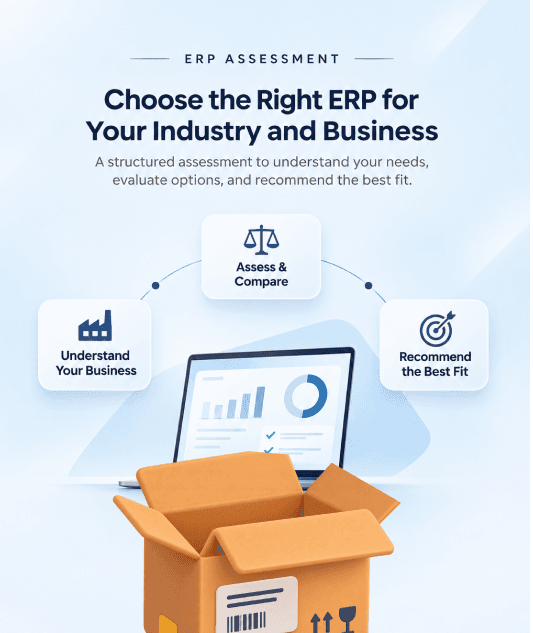
Plastics ERP Implementation in Canada: How Dynamics Square Does It
Dynamics Square follows Microsoft's Success by Design method to implement Dynamics 365 for Canadian packaging and plastics manufacturers. The process has five stages, starting with an understanding of your factory operations and ending with support after launch. We also agree on how your team records production jobs, material batches, and waste to keep reports accurate.
Discover
Dynamics Square visits your factory to understand how materials arrive, move through production, and reach customers. We review purchasing, production, inventory, and delivery processes to identify what needs improvement.
1
2
Initiate
In this step, Dynamics Square agrees on the project scope and recommends Business Central or Supply Chain Management. We also assign people to manage product details, material specifications, and equipment records.
Implement
Next, Dynamics Square sets up products, material batches, production steps, waste records, and job costing. We then transfer customer and supplier details, open orders, and available stock, checking the information against your existing records.
3
4
Prepare
We train your employees and test the system using actual production jobs. We check whether your team can trace materials from the supplier's delivery to the finished pallet sent to a customer.
Operate
Dynamics Square supports your business after the system goes live. We help your team manage new products, changes in board and film suppliers, production updates, and customer audit requirements.
5
Dynamics 365 ERP Pricing for Packaging Manufacturing
The prices below show Microsoft's published rates in Canadian dollars. Your final cost depends on the number of full-access and occasional users, additional tools for estimating, weighing, and label printing, and the work required to implement the system.
Business Central
Essentials
From $108.50CAD/user/month
Finance, sales, purchasing and inventory with lot tracking
Premium
From $149.20CAD/user/month
Essentials plus production orders, BOMs, routings, MRP and Quality Management
Team Members
From $10.90CAD/user/month
Light access for approvals, lookups and small edits
Supply Chain Management
Standard
From $284.90CAD/user/month
Product configuration, finite scheduling, quality orders and Asset Management
Premium
From $407.00CAD/user/month
Standard plus full demand planning, capacity and storage planning, and Copilot Credits
Implementation charges are separate from software licences and depend on the work involved. A single factory using Business Central generally requires a smaller project. A business running several factories on Supply Chain Management may need more time to transfer product specifications, material details, and equipment records.
Get a Custom QuoteWhy Canadian Packaging Manufacturers Choose Dynamics Square
Dynamics Square brings proven manufacturing experience. Our team has completed 60+ manufacturing ERP implementations, supported by 35+ manufacturing and supply chain consultants who understand production and operational challenges.
We begin with your factory operations. Dynamics Square studies machine changeover times, material waste, and die inventories before deciding how to build your ERP system.
You receive a clear product recommendation. We explain whether Business Central or Supply Chain Management meets your needs and recommend the simpler option when it covers your requirements.
Consultants at Dynamics Square are certified in both products. Their practical experience helps them recommend and implement the right Dynamics 365 solution for your packaging operations.
Our support continues after launch. We remain available as your products, materials, and dies change, and when customers request records during audits.
We understand Canadian tax requirements. A decade of Canadian manufacturing projects has given us experience with GST, HST, provincial sales tax, and relevant packaging regulations.
Frequently Asked Questions
Packaging manufacturing ERP connects customer orders, estimating, purchasing, inventory, production, quality checks, shipping, and accounting in one system. It helps converters track material use, calculate job costs, monitor waste, and trace finished products back to their original material batches. It also helps Canadian businesses manage GST, HST, and provincial sales tax records.
Yes, Microsoft Dynamics 365 offers two ERP options for packaging manufacturers. Business Central works well for businesses with standard products, repeat orders, and one or a few production sites. Supply Chain Management supports larger operations with customised packaging, complex production schedules, and multiple factories. Dynamics Square helps identify the right option by reviewing your products, orders, and factory requirements.
Dynamics 365 connects customer specifications, quotes, material requirements, production orders, and deliveries. Teams can record product sizes, materials, print designs, and order quantities. Business Central manages product variations and production orders, while Supply Chain Management can create material lists and production steps for configured products. This keeps order details connected through production, shipment, and invoicing.
Yes, Dynamics 365 records incoming material batches and tracks which production orders use them. Teams can trace finished packaging back to the original supplier batch and identify which customers received products made from it. The system also records expected and actual waste, helping managers review material losses by job, machine, and reason. Supply Chain Management can track both weight and quantity when material rolls vary.
Dynamics 365 helps manufacturers schedule work across presses, cutters, laminators, and other production equipment. Business Central supports production planning and quality inspections when materials arrive or products are completed. Supply Chain Management adds detailed scheduling based on available machine capacity, along with quality orders and sampling plans for more complex inspection requirements.
Every Pallet Traceable to Its Reel, Press and Shift
Accurate job costs, visible waste and fast answers for auditors, so margin holds steady order after order.
Book a Free Consultation Today