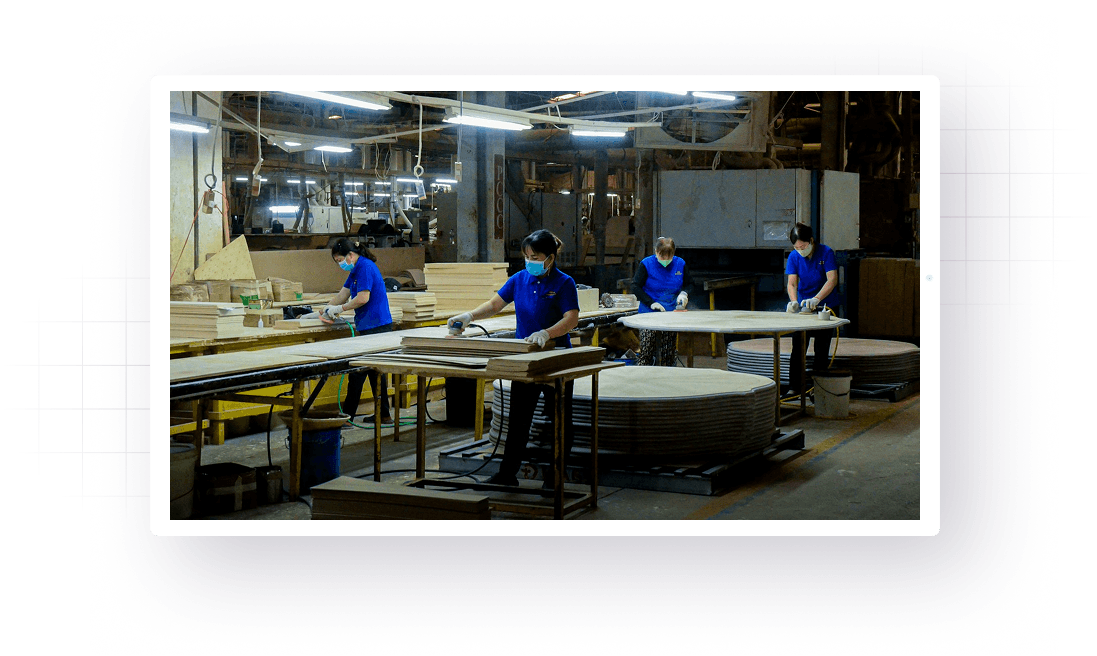
Why Furniture Manufacturers Trust Us
60+
Implementations in Manufacturing
35+
Manufacturing and Supply Chain Consultants
14+
Years Serving Canadian Manufacturers
Dynamics 365 ERP for Furniture Manufacturing: Business Central or Supply Chain Management
Dynamics 365 ERP for furniture manufacturing connects purchasing, material tracking, production, quality checks, inventory, deliveries, and accounting. It helps manufacturers track timber, plywood, fabric, foam, and fittings while monitoring production costs and material waste.
Dynamics Square offers Dynamics 365 Business Central and Supply Chain Management for different furniture manufacturing needs.

Dynamics 365 Business Central
Business Central works well for cabinet makers, furniture manufacturers, upholsterers, and office seating businesses producing standard products at one or a few factories. It helps manage material lists, product sizes and finishes, customer-based production orders, batch tracking, quality inspections, outsourced work, material planning, and waste records.
Explore Business Central
Dynamics 365 Supply Chain Management
Supply Chain Management supports larger furniture manufacturers operating across several factories or producing highly customised furniture. It helps manage customer-selected designs, product changes, material grades and colour shades, machine schedules, equipment maintenance, and warehouse operations. It also supports more detailed production planning for complex manufacturing requirements.
Explore Supply Chain ManagementFurniture manufacturers need test reports, quality records, and supplier documents to meet retailer, government buyer, and inspection requirements.
Dynamics 365 helps maintain material batch details and production records that allow businesses provide supporting information during customer audits and quality checks.
Match My Plant to a ProductWhat Compliance Requirements Must Furniture Manufacturing ERP Meet in Canada?
Canadian furniture manufacturers must maintain records to support product safety, material compliance, and customer requirements. These records help businesses identify suppliers, trace finished products and respond to inspections or customer requests.
Canada Consumer Product Safety Act
The Canada Consumer Product Safety Act requires businesses handling consumer products commercially to keep records of their suppliers and customers. If a business learns about a product-related incident, it must notify Health Canada and its supplier. Manufacturers and importers must also submit a written report. Linking purchases, production orders, and shipments helps retrieve these records quickly.
Surface Coating Materials Regulations
Canada’s Surface Coating Materials Regulations limit the amount of lead and mercury in dried coating materials. The rules can apply to paints, stains, lacquers, films, and coatings used on accessible furniture surfaces, including children’s products. Furniture manufacturers should retain supplier details and batch records, linking each coating material to the furniture pieces where it was used.
Cribs, Cradles and Bassinets Regulations
The Cribs, Cradles and Bassinets Regulations set safety, testing, and labelling requirements for children's sleep products. Labels and instructions must appear in English and French, alongside the product's model name or number and manufacturing date. Canadian manufacturers and importers must keep supporting compliance documents and provide them to an inspector when requested in writing.
Buyer Requirements
Retailers, hotels, schools, and public-sector buyers may ask furniture suppliers for test reports, material details, inspection records, and delivery information. Keeping supplier batches, production checks, and customer shipments connected makes these requests easier to answer. An ERP system brings these records together, helping teams find the required information without searching through separate files and spreadsheets.
What Dynamics 365 for Furniture Manufacturing Needs to Do
Dynamics 365 ERP for furniture manufacturing connects material purchasing, product specifications, production planning, inventory, quality checks, and deliveries.
Business Central and Supply Chain Management help manufacturers track timber, boards, fabric, foam, fittings, and finished furniture. They also help calculate production costs, monitor material waste, manage custom orders, and maintain records showing how each piece was manufactured.
Lumber, panel and fabric tracking
Dynamics 365 records materials such as solid timber, plywood, particleboard, foam, fabric, hardware, and packaging as stock items. Each incoming delivery can receive a batch number, helping teams identify individual bundles, pallets, and fabric rolls. Manufacturers can also manage different measurement units, including board feet, square metres, and individual pieces. Production records show which material batches went into each furniture order and help trace finished products back to their original suppliers.
Bills of materials and production steps
A bill of materials lists everything needed to manufacture a piece of furniture. For example, a sofa can have separate material lists for its frame, cushions, legs, and hardware. Business Central supports these layered lists, making it easier to manage complex furniture designs. Manufacturers can also maintain approved versions of material lists and production instructions. Production routings show the sequence of work, including cutting, assembly, upholstery, finishing, and the time required for each operation.
Custom and made-to-order furniture
Business Central helps manufacturers plan production around confirmed customer orders instead of building everything for stock. Its planning tools help teams identify the materials and production work needed for each order. Product variants can record different furniture sizes, fabrics, and finishes. Businesses can also connect specialist configuration software to manage more complex customer choices. This helps sales and production teams work from the same product specifications, material requirements, and delivery expectations.
Product configuration and design changes
Supply Chain Management helps furniture manufacturers manage products with many customer-selected options. For example, customers may choose different frame designs, fabrics, finishes, and leg styles. Configuration rules check whether these choices work together before production begins. The system can then create the required material list and production steps for each combination. Engineering change management also helps control design revisions, so production teams receive approved specifications before manufacturing updated products.
Cutting, machine and finishing schedules
Dynamics 365 helps manufacturers plan work across panel saws, routers, edge banders, finishing booths, and upholstery lines. Each production area can have its own working calendar and available capacity. Both products support material planning, helping teams decide what to purchase and manufacture. Supply Chain Management adds scheduling based on actual machine capacity, allowing planners to allocate jobs according to available equipment, materials, and delivery dates.
Outsourced furniture manufacturing work
Furniture manufacturers often send certain jobs to outside suppliers for powder coating, metal plating, veneering, or fabric cutting and stitching. Dynamics 365 can record these activities as outsourced production steps within the original manufacturing order. Teams can track materials sent to suppliers, work received after processing, and the charges involved. This keeps outsourced work connected to the furniture order and helps managers calculate the complete cost of each finished product.
Offcuts, scrap and material waste
Dynamics 365 helps manufacturers compare expected material waste with actual losses during production. Teams can record planned allowances for cutting, assembly, and finishing, then enter the scrap generated during each operation. Different waste reasons help managers identify losses from cutting mistakes, damaged finishes, or upholstery rework. Supply Chain Management can also return usable offcuts to inventory and account for their value. Reports show material waste by product, machine, and production stage.
Quality checks, equipment and warehouse management
Business Central's Quality Management module, introduced in the 2026 release wave, supports inspections when materials arrive and products are completed. Supply Chain Management adds quality orders, sampling plans, and equipment maintenance scheduling for machines such as routers and presses. Its warehouse tools also help organise stock picking and finished furniture movements. Power BI and Excel reports bring production costs, material waste, and delivery performance together using Dynamics 365 data.
Business Central vs. Supply Chain Management for Furniture Manufacturing
The cards above provide a quick comparison of both Microsoft ERP systems. The table below explains their features in more detail, helping you compare them with your furniture manufacturing needs or discuss them with your IT team.
| Aspects/Parameters | Business Central | Supply Chain Management |
|---|---|---|
| Best suited to | Millwork, casegoods, upholstery and office seating makers with a defined catalogue | Multi-plant groups, wide-option makers, contract suppliers |
| Customer orders | Supply released by sales orders, Sales Order Planning, blanket orders | Configured items on quotations and sales orders |
| Options | Item variants and attributes, with third-party configurators available | Rule-based configuration models |
| Design changes | BOM versions certified before release | Engineering change management |
| Lots | Item tracking codes put a lot number on every receipt | Batches carry attributes, so a roll can be reserved by shade |
| Scheduling | MRP and shop calendars for work and machine centres | Master planning, scheduling to finite capacity, Gantt-style production view |
| Leftovers | Allowance percentages, scrap codes at output posting | Offcuts as co-products or by-products, shop-floor scrap entry |
| Warehouse | Locations and bins, basic picking | Advanced warehouse management |
| Machine upkeep | Tracked as fixed assets, with maintenance from an add-on | Built-in Asset Management that schedules upkeep from run counters |
| Inspections | Quality Management that can quarantine a lot | Quality orders with sampling plans, plus non-conformance cases |
| Scale | Several companies in one environment, with intercompany and consolidation tools | Multiple legal entities with shared data, across plants and currencies |
| Starting licence (Canada) | Premium at $149.20 CAD/user/month | Standard at $284.90 CAD/user/month |
Business Central Premium works well for furniture manufacturers producing standard designs at one or a few factories. Supply Chain Management is a better choice for businesses offering many custom options, making frequent design changes, maintaining CNC machines and routers, or operating across several companies.
Saws, CNC machines, weighing scales, label printers, and spray booth controls often use separate software. These systems can connect with Dynamics 365 through partner solutions and share production information. During discovery, Dynamics Square identifies the equipment and agrees what information each system sends and receives, helping teams work with consistent cutting lists and material records.
Get a Platform RecommendationHow Does Dynamics Square Help You Find the Right Fit
chosen too small leaves option rules and yield figures in spreadsheets.
A custom cabinet maker, a sofa manufacturer offering many fabric choices, and a furniture supplier serving student housing have different production needs. Each business needs an ERP system that matches how it manages orders, materials, and manufacturing.
Dynamics Square assesses your stock and custom orders, product options, design changes, number of factories, outsourced work, and customer audit requirements. This helps us recommend the right ERP without paying for features you do not need or relying on spreadsheets for important production information.
Book Your Free Fit Assessment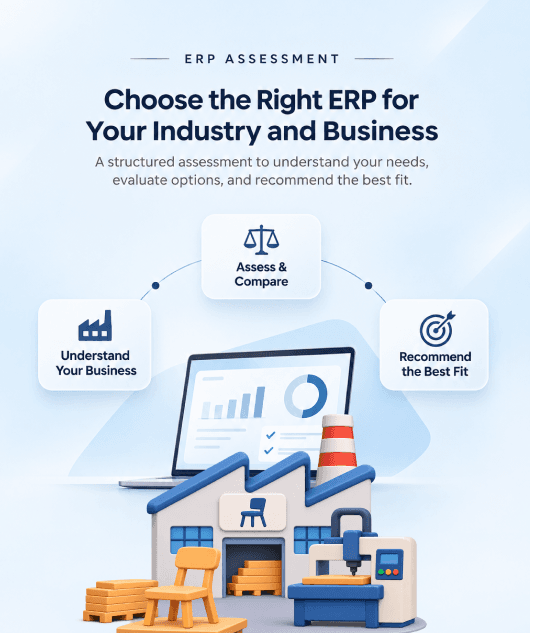
Furniture ERP Implementation in Canada: How Dynamics Square Does It
Dynamics Square follows Microsoft's Success by Design method to implement Dynamics 365 for Canadian furniture manufacturers. The process covers five stages, from understanding factory operations to supporting your team after launch.
Discover
Dynamics Square reviews how materials arrive, move through cutting, assembly, and finishing, and reach customers, identifying gaps in purchasing, production, inventory, and delivery processes.
1
2
Initiate
Next, we define the project scope, recommends Business Central or Supply Chain Management, and assign responsibilities for managing product details, material lists, design options, and production records.
Implement
Dynamics Square configures products, sizes, finishes, material batches, production steps, waste records, and costing, then transfers supplier details, customer information, and open orders while checking everything against existing records.
3
4
Prepare
At this stage, we train your employees using actual furniture orders, test production processes from material receipt to final delivery, and check whether each lumber or fabric batch can be traced.
Operate
Dynamics Square continues supporting your team after launch, helping manage new furniture collections, changing designs, additional production equipment, and customer audit requests as your manufacturing requirements grow.
5
Dynamics 365 ERP Pricing for Plastics Manufacturing
The table shows Microsoft's current suggested prices in Canadian dollars. Your final cost depends on the licences you need, additional tools for product configuration and barcode scanning, and the work involved in implementing the system.
Business Central
Essentials
From $108.50CAD/user/month
Accounting, order entry, buying, inventory and lot-tracked items
Premium
From $149.20CAD/user/month
Essentials plus shop-floor production, MRP and Quality Management
Team Members
From $10.90CAD/user/month
Read, approve and make small edits
Supply Chain Management
Standard
From $284.90CAD/user/month
Rule-based configuration, master planning, finite scheduling, directed warehousing
Premium
From $407.00CAD/user/month
Everything in Standard, with full demand planning, capacity and storage planning, and Copilot Credits
The implementation budget depends on the size and complexity of your furniture operations. A single-factory Business Central setup in general involves fewer changes, while a multi-site Supply Chain Management rollout requires more product data, design records, and material specifications to be transferred.
Get a Custom QuoteWhy Canadian Furniture Manufacturers Choose Dynamics Square
We bring proven manufacturing experience to every project. Our team has completed 60+ manufacturing ERP implementations, supported by 35+ manufacturing and supply chain consultants with practical industry knowledge.
Dynamics Square starts by understanding your factory operations. Dynamics Square reviews cutting waste, custom product options, and rework before planning your ERP implementation.
You receive a clear ERP recommendation. We explain whether Business Central or Supply Chain Management fits your requirements, without recommending a larger system unnecessarily.
Our consultants are certified in both Microsoft products. Their practical experience configuring each system helps them recommend the right solution for your furniture manufacturing processes.
Our support continues after your ERP goes live. We help manage new furniture collections, changing fabrics and finishes, supplier changes, and customer audit requirements.
We understand Canadian business and tax requirements. More than ten years of Canadian project experience helps us handle GST, HST, provincial sales taxes, and relevant product safety requirements.
Frequently Asked Questions
Yes, Microsoft Dynamics 365 helps Canadian furniture manufacturers manage purchasing, production, inventory, quality checks, deliveries, and accounting in one system. It tracks materials such as lumber, plywood, fabric, foam, and fittings while monitoring production costs. Business Central works well for manufacturers with standard products and fewer factories, while Supply Chain Management supports complex products and multi-site operations. The system can also be configured to handle GST, HST, and applicable provincial sales taxes.
Dynamics 365 connects customer choices, product specifications, material requirements, production, and delivery. Sales teams can record the required furniture size, fabric, finish, and other options. Business Central manages product variations and production orders, while specialist configuration tools can support more complex customer choices. Supply Chain Management checks combinations against product rules and creates the required material lists and production steps. Manufacturers can then track material, labour, and outsourced work costs against each order.
A bill of materials lists the materials and components needed to make a product. Business Central supports layered lists, so a sofa can have separate material lists for its frame, cushions, legs, and fittings. Production routings show the steps involved, such as cutting, assembly, upholstery, and finishing. They also record the time required for each operation. Supply Chain Management provides engineering change management to control design updates and approved production changes.
Yes, Dynamics 365 assigns batch numbers to incoming materials such as lumber, plywood, upholstery fabric, foam, and fittings. Production records show which batches were used to manufacture each furniture order. This allows teams to trace materials from suppliers to finished products and customer deliveries. If a customer reports a problem, manufacturers can identify the materials used and check whether other products were made from the same batch.
Furniture ERP implementation costs depend on the selected Dynamics 365 product, number of users, production sites, and required software connections. Additional work may include transferring product specifications, setting up material tracking, connecting machines, and training employees. Software licence fees are separate from implementation charges. Dynamics Square reviews your factory operations and project requirements before preparing a tailored implementation quote.
Know Exactly What Went into Every Piece You Ship
Track every material batch, monitor cutting waste, and calculate the cost of each furniture order. Dynamics Square helps Canadian furniture manufacturers connect production records and deliveries through Microsoft Dynamics 365.
Book a Free Consultation Today